
01
Nov 2026
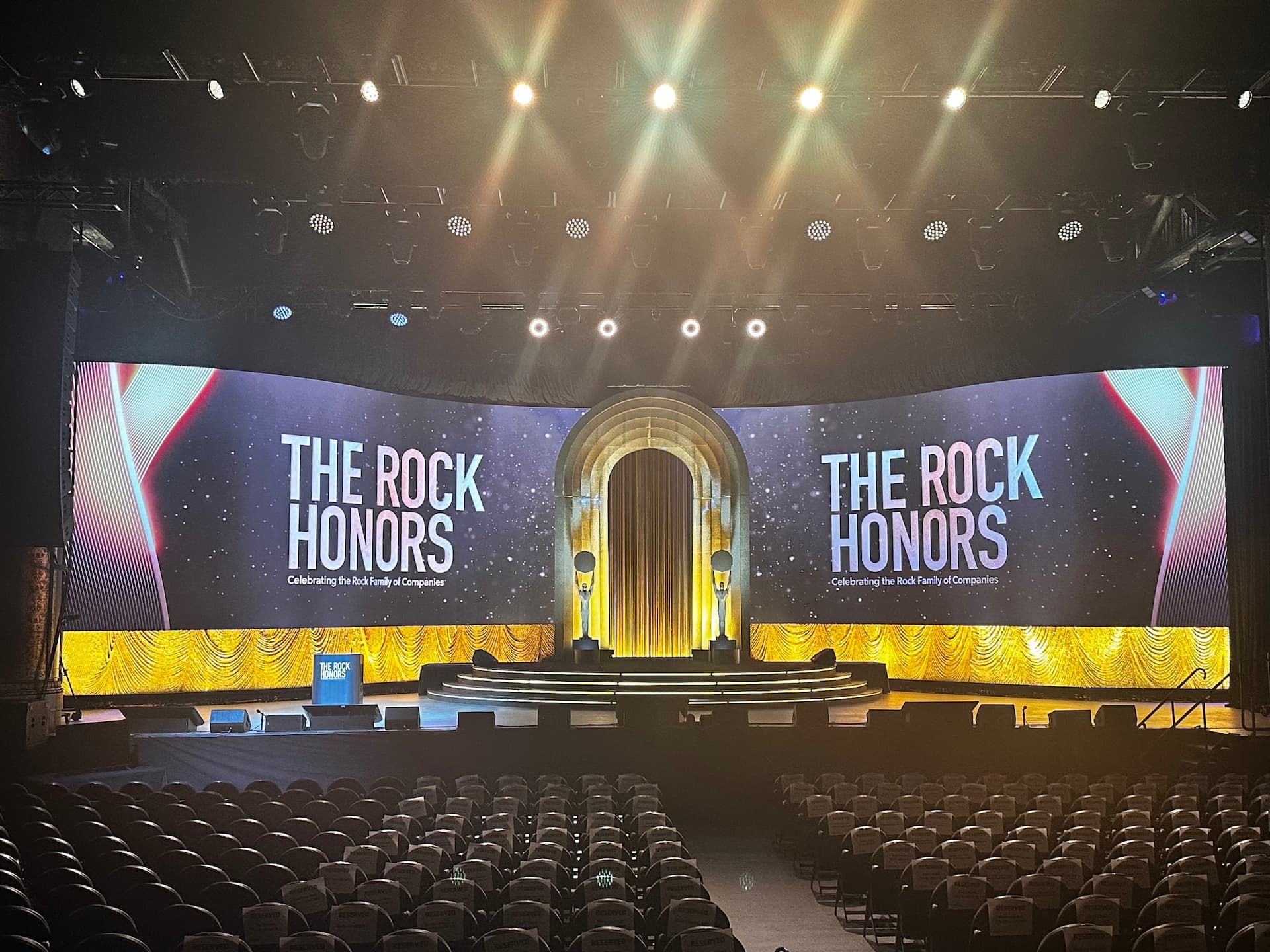
You’ve chosen your venue and the dates are set. Then the contract arrives—with a surprising AV (audiovisual) clause and a quote higher than you expected. Suddenly, you’re faced with a big decision: should you go with the hotel’s in-house AV team, or bring in your own production partner?
Can you bring in your own AV team? It all comes down to your venue contract. Some venues have exclusive agreements, and many charge a fee for bringing in outside partners. The best time to clarify these terms is before you sign anything.
Premier Creative Group has over 30 years of national event production experience. In this guide, we’ll walk you through how to decide between in-house and outside AV, when each is the right fit, and what to ask before you sign any contracts.
Can You Bring Your Own AV Into a Hotel?
You can bring in your own AV team—if your venue contract allows it. Negotiate before you sign. Some venues have exclusive AV deals that limit outside options, while others allow outside teams for a fee.
Many planners feel squeezed by these terms. In a 2024 PCMA Convene survey, event professionals called post-pandemic AV cost increases “astronomical” and said exclusive agreements left little flexibility to choose outside vendors.
Before you sign, read the AV clause carefully. Watch for terms like exclusive, preferred, or outside contractor, and ask the venue exactly what they mean for your event.
Key Takeaway: The venue contract decides whether you can bring your own production team. Read the AV clause before you sign, while you still have room to negotiate.
Why Is Hotel AV So Expensive?
PCMA Institute guidance from 2020 notes that in-house AV teams typically share revenue with the property, which often makes them more expensive than outside firms. However, they do offer convenience and in-depth knowledge of the venue.
Planners in the 2024 Convene survey echoed this, describing in-house AV contracts as expensive and inflexible for rate negotiation.
What Fees Come With Bringing In Outside AV?
Bringing in your own team doesn’t always eliminate venue charges. Venues often add a fee for outside contractors to make up for revenue they’d otherwise get from their in-house AV team.
Venues may also have their own rules. Meetings Today recommends requesting the venue’s “AV service standards” or “production guidelines” document, where you’ll find all requirements and fees for items like in-house supervisors, power, and internet.
Be sure to compare the full costs: on one side, the in-house quote; on the other, the outside team’s quote plus the venue’s fees and any freight or shipping costs.
Key Takeaway: In-house AV usually costs more, but outside teams can trigger venue fees. Always compare the total costs side by side before you decide.
When Is the Hotel’s In-House AV Team the Right Call?
For a straightforward meeting in a single room—maybe just a microphone, screen, and laptop—the hotel’s in-house team is usually your best bet. They’re already on site and know the space inside and out.
As Jim Russell of Maritz (and chair of the MPI International Board of Directors) told Meetings Today, “In-house people know the ins and outs of that facility, and what’s worked well there before.”
Your contract matters here, too. If you’ve already signed an exclusive agreement, the in-house team might be your only practical option. Always ask for an itemized quote so you know exactly what’s included.
Key Takeaway: The in-house team is best for simple, one-room meetings or when you’ve signed an exclusive contract. Their strengths are convenience and venue expertise.
When Does Your Own Production Team Make More Sense?
An outside production team makes more sense as your program grows. If you’re running several rooms at once, hosting a large main session with video and lighting, or traveling to multiple cities, your own team can deliver the polish and consistency high-level events require—especially for sales kickoffs or leadership summits.
At that scale, someone needs to plan the whole show and connect the audio, video, lighting, set, and creative elements. That’s why we believe in working with a true production partner—not just a vendor.
What a Production Partner Takes Off Your Plate
A good production partner gets the venue’s production guidelines up front and plans around them. We work closely with the venue’s team to make sure all requirements are met well before setup day. Our team builds your show in 3D, so you and your leadership can review and approve it in advance—making changes on paper, not on show day.
What This Looks Like With Our Team
We’ve been the preferred AV partner at Huntington Place in Detroit since 2014, and that experience travels with us. With over 5,000 live events in 35+ states, our team brings deep venue knowledge to every event, no matter the city.
Our crew includes full-time employees and carefully vetted freelance technicians and stage managers—not random subcontractors. For touring programs, a core crew travels with you, while local experts join in each city so you get consistent quality everywhere.
One team covers audio, video, lighting, set design, and creative—giving you a single point of contact for your entire show.
Key Takeaway: Your own production team is the right choice for complex, multi-room, multi-city, or high-profile events. One team owns the entire show—and answers directly to you.
What to Ask Before You Sign the Venue Contract
Negotiate outside production terms before you sign. PCMA Institute guidance recommends removing the outside-contractor fee up front, before your agreement is final.
Negotiating these terms isn’t always easy. In a 2026 Meetings Today poll, a quarter of planners said that AV and production negotiations were even tougher than attrition issues. While the poll was small, it’s a good reminder to build in extra time.
- Does the contract include an exclusive AV agreement? If yes, ask if there’s any flexibility to bring in an outside team for your event.
- Is there a fee for using an outside team? Get the amount in writing—and see if you can negotiate it down or remove it.
- Can we review the production guidelines now? Request all AV service standards or production guidelines before signing, so nothing catches you off guard later.
- What does the in-house quote include? Always ask for an itemized quote so you can make an apples-to-apples comparison.
- Will the same terms apply at every venue? If your program travels, ask these questions everywhere you go.
Our guide to what planners need to know about a request for proposal (RFP) can help you put these questions in writing.
Key Takeaway: Ask about exclusivity, outside-team fees, production guidelines, and itemized quotes before you sign—while you still have leverage.
How to Make the Case to Your Boss or Procurement
Show the full cost and any risks side by side—not just two quotes. Finance and procurement teams want proof you compared options fairly, and leadership wants confidence the event will run smoothly. Bring these points to the table:
- The full cost: Lay out the in-house quote next to the outside quote, including all venue fees and any freight or shipping costs.
- The contract terms: List which fees and conditions you settled before signing the contract.
- What leadership will see: Share 3D views of the room so decision-makers can approve the setup before anything is built.
- Who is accountable: One team for audio, video, lighting, set, and creative—with a single point of contact.
- What carries over: For traveling programs, having the same team and standards in every city ensures consistency.
If the in-house team is the better value for a simple meeting, say so. Fair comparisons build trust with your finance team.
Key Takeaway: Provide a full-cost comparison for finance, and 3D visuals for leadership. Bringing both to the approval conversation builds trust and confidence.
Frequently Asked Questions
Can I bring my own AV team into a hotel event?
It depends on your venue contract. Some venues have exclusive AV agreements and often charge a fee if you use an outside team. The best time to negotiate these terms is before you sign the contract.
Why do venues charge a fee for outside AV?
The fee covers the revenue the venue would otherwise earn from its in-house AV team. Try to negotiate this fee down—or have it removed—before you sign with the venue.
Is hotel in-house AV always more expensive?
Not always. In-house AV teams tend to cost more because they share revenue with the property, but outside teams can trigger venue fees. Always compare the total cost before deciding.
When should I use the hotel’s AV team?
For a straightforward, single-room meeting, the hotel’s team is often the best choice—they’re already onsite and know the space. If you’ve signed an exclusive AV contract, the in-house team may be your only option.
What is a venue’s production guidelines document?
This document outlines the rules for outside production teams. Sometimes called AV service standards, it lists requirements and fees for things like in-house supervisors, power, and internet. Always request it before signing your contract.
Do I need a production partner for a sales kickoff or leadership meeting?
Not always. For a short, single-room meeting, the venue’s team is often sufficient. Bring in a production partner when your event involves a main session with video and lighting, multiple rooms or cities, or when leadership expects a polished, high-impact show.
Share Your Venue Plans. One Team Will Bring Them to Life.
The right choice depends on your rooms, your venues, and your contract. For simple, single-room meetings, in-house AV is often the best option. As your program grows more complex, a dedicated production partner can take the pressure off and deliver consistent results across every event.
Tell us where your event is headed, and we will help you weigh the options. One Team. One Vision. One Point of Accountability.