
08
Jun 2026
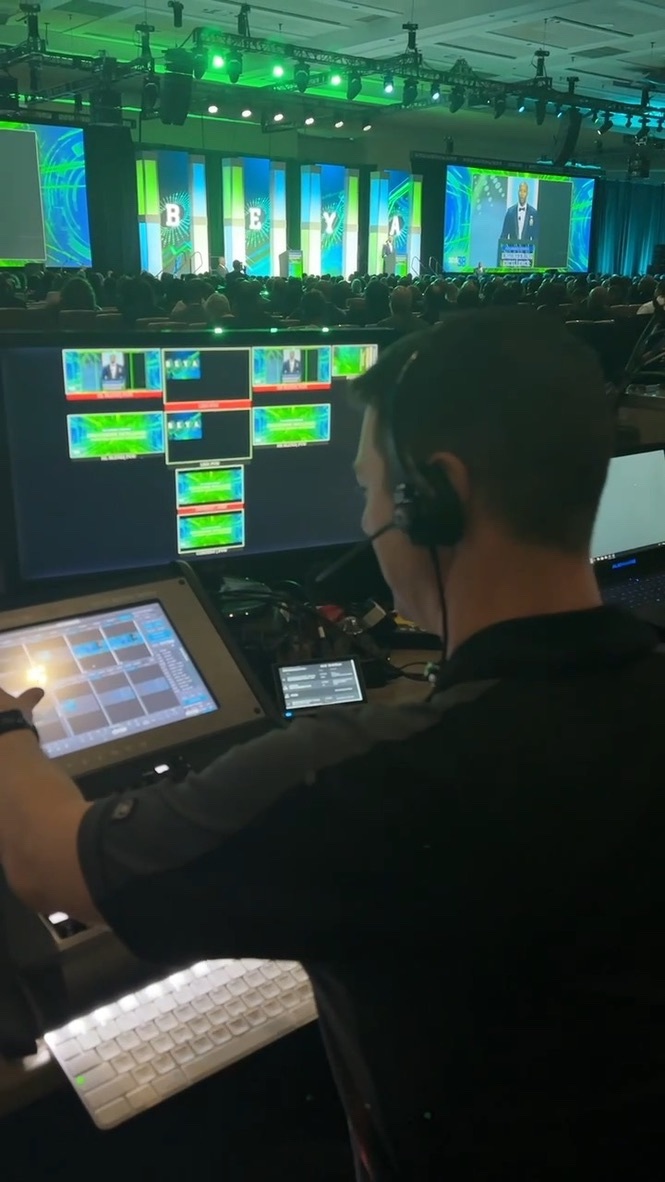
Most event production RFPs land in production partner inboxes with the same mix of details: a venue, a date, a head count, sometimes a brand-look-and-feel deck, and a long list of equipment specs. The RFPs that get great responses include a few things the average RFP leaves out — and they leave out a few things the average RFP wastes pages on.
This article is a planner-side guide to what production partners are actually reading for when an RFP comes in. The goal is shorter RFPs that produce better proposals, and faster vendor selection cycles where the responses you get are actually comparable.
What Is an Event Production RFP?
An event production RFP (request for proposal) is the planner-side document that scopes an upcoming event for production partners and invites them to bid on the work. A useful RFP gives the production partner enough context to scope the show accurately — venue, dates, audience, objectives, content overview, and any non-negotiable constraints — without prescribing solutions before the partner has had a chance to design them.
For complex productions (multi-day, multi-room, executive-visibility, or multi-city), the RFP is also a trust signal. The level of preparation in the RFP tells the production partner how disciplined the planning has been so far — and how much of the partner’s job will be back-filling missing context vs. moving the show forward.
Key Takeaways:
- An RFP scopes the show and invites bids from production partners.
- Useful RFPs give context, not prescriptions.
- The RFP itself is a trust signal about planning discipline.
What Production Partners Are Actually Reading For
When a partner reads your RFP for the first time, the questions they’re trying to answer are different from what the RFP usually answers head-on:
What is the actual objective of this event? Not the run-of-show — the strategic outcome. A product launch, a sales kickoff, an annual conference, a recognition program. Different objectives drive different production scopes.
Who is the audience and where will they sit? Audience size, viewing distances, IMAG requirements, sightline constraints — these determine LED wall sizing, audio coverage, and scenic scale.
What’s the production-quality bar? Executive-visibility internal event vs. customer-facing brand activation vs. industry conference vs. trade show booth — each has a different production standard.
Who owns the content workflow? Pre-recorded executive video, live presentations, awards programs, breakout content — knowing who’s building, when, and how it hands off matters more than equipment specs.
What’s locked vs. flexible? Venue is usually locked. Date is usually locked. Scenic concept is often flexible. Budget is sometimes flexible. The RFP that signals what’s negotiable produces better proposals.
What are the non-negotiables? Brand standards, security requirements, executive logistics, vendor approval lists, insurance minimums — these are show-stoppers if missed and easy to include up front.
Who’s making the decision and on what timeline? The proposal cycle has its own pace. Knowing the decision-maker and the calendar makes the partner’s response more useful.
If your RFP answers most of these, the proposal you get back will be specific, scoped, and comparable to other partners’ responses. If it doesn’t, you’ll get either generic boilerplate or a follow-up call before any real proposal.
Key Takeaways:
- RFPs answer “what we need” but partners are also reading for “why this event exists.”
- Audience, content workflow, and the production-quality bar matter more than equipment specs.
- Knowing what’s locked vs. flexible accelerates the response.
The Seven Components That Make an RFP Useful
A useful event production RFP includes these seven sections:
The strategic objective. Two to three sentences on what the event is supposed to accomplish. Not the run-of-show. Not the equipment list. The outcome.
The audience profile. Size, demographic, expectations. Internal team vs. external attendees. Executive presence. Press attendance.
The venue and dates. Confirmed venue, confirmed dates, any flexibility windows. If the venue is still in selection, say so — partners can sometimes help with venue assessment.
The content overview. What content runs in the show — keynotes, panels, training tracks, awards, pre-recorded video. Who’s responsible for content production vs. content delivery.
The required scope. The disciplines you need bid: audio, video, lighting, scenic, content, on-site crew, exhibitor support, and so on.
The constraints and non-negotiables. Brand standards, security clearances, vendor approval lists, insurance requirements, in-house labor jurisdiction (if you know it), executive-side logistics.
The decision process. Who’s evaluating, what’s the timeline, and what success looks like in the proposal response.
Anything beyond these seven is a bonus — and sometimes counterproductive. RFPs that prescribe specific equipment, specific console models, or specific crew sizes can lock the partner into a less efficient solution before the design conversation has even started.
Key Takeaways:
- A useful RFP has seven sections — and stays out of solution prescription.
- Lock in objectives, audience, venue, content, scope, constraints, and decision process.
- Skip the gear specifications — let the partner specify.
What You Don’t Have to Include and What to Leave Out
Three categories of detail show up in average RFPs that don’t help the partner and slow your own evaluation:
Equipment specifications. A 40-foot LED wall, a specific lighting console, a specific PA system. The right way to spec is by outcome — audience size, viewing distances, IMAG requirements, brand standards — and let the partner specify the gear that delivers it. We’ve written about LED wall pixel pitch — the wrong specification can drive thousands of dollars of waste while underdelivering on the experience.
Pricing assumptions. Some RFPs include an implied budget anchor or a target line-item cost for individual scopes. This often results in proposals that match the anchor rather than the actual right scope. If you have a budget, share it directly. If you don’t, leave price discovery to the proposal phase.
Detailed run-of-show. The minute-by-minute show schedule changes during pre-production. Sharing a detailed run-of-show in the RFP locks partners into responding against a schedule that won’t be the final one. A high-level program structure (general session, breakouts, awards, evening) is enough.
The pattern across all three: leave room for the partner to design the right solution rather than prescribing it before design starts. Good partners will use 3D pre-visualization to lock the design before fabrication, so the upfront RFP doesn’t need to over-specify.
Key Takeaways:
- Don’t spec equipment — spec outcomes.
- Be honest about the budget if you have one, otherwise let the proposal handle it.
- Run-of-show belongs in pre-production, not the RFP.
How RFPs Reveal a Planner’s Level of Preparation
Production partners read RFPs partly for the show details and partly for what the document reveals about how the planning has gone so far. Three signals partners pick up on:
The objective is clear or absent. RFPs that lead with strategic outcomes signal a team that’s done discovery work. RFPs that open with the equipment list signal a team that’s still in operational mode.
The constraints are surfaced or hidden. Strong RFPs include the non-negotiables up front — brand standards, security, vendor approval. Weaker RFPs surface those constraints during the proposal cycle, forcing late rework.
The decision process is documented. RFPs that name the decision-maker, the evaluation criteria, and the timeline get faster, more focused responses. RFPs that don’t can stall in proposal-evaluation limbo for weeks.
This isn’t a judgment call — it’s a function of how partners scope their response. RFPs that signal a well-prepared planning team get more thorough proposals because the partner has confidence the engagement will move forward cleanly.
Key Takeaways:
- RFPs are read as both scope documents and preparation signals.
- Clear objectives and constraints signal a team ready to engage.
- A documented decision process accelerates response quality.
When the RFP Is the Wrong Tool
For some engagements, an RFP isn’t actually the right document. Three situations where a conversation beats a formal RFP:
Multi-year or multi-event programs. When the relationship is the deliverable, not the single show, the formal-RFP cycle adds friction without surfacing the things that matter (continuity, consistent crew, multi-venue execution).
Highly flexible scope. If the show concept is still in flux — scenic still being designed, content still being scoped — the RFP forces premature specificity. Better: a discovery conversation that defines scope before bidding.
Strategic-level partnerships. For executive-visibility productions where the partner becomes part of the planning team, the qualifying conversation happens before any RFP gets written.
In these cases, starting with a conversation produces better-fitted partnerships than starting with a document.
Key Takeaways:
- Multi-year and strategic engagements often outgrow formal RFPs.
- Flexible-scope shows benefit from discovery before bidding.
- The RFP is a tool for clear, defined-scope engagements.
Frequently Asked Questions About Event Production RFPs
What should be included in an event production RFP?
A useful event production RFP includes seven components: the strategic objective, the audience profile, the confirmed venue and dates, the content overview, the required production scope, the constraints and non-negotiables, and the decision process. Each section gives the production partner enough context to scope a real proposal without prescribing equipment before design.
How long should an event production RFP be?
Most well-scoped event production RFPs are 5 to 15 pages — long enough to cover the seven components above, short enough to read in one sitting. RFPs longer than 15 pages often include detail that belongs in pre-production rather than in the bidding process.
Should an RFP specify the equipment we want?
No. Specify outcomes — audience size, viewing distances, IMAG requirements, brand standards — and let the production partner specify the gear that delivers the outcome. Prescribing equipment before design often locks the engagement into a less efficient solution.
Should we include our budget in the RFP?
If you have a budget, sharing it directly produces more useful proposals. Implied budget anchors or unstated targets tend to produce proposals that match the anchor rather than the actual right scope. Honest budget framing accelerates the right conversation.
How many production partners should we send the RFP to?
For most enterprise events, three to five qualified production partners is the typical bidding pool. More than that overwhelms the evaluation process; fewer than that risks proposals that aren’t well-compared. Quality of the partner pool matters more than quantity.
When should we start the RFP process?
For most enterprise productions, 6 to 9 months before the event. That allows time for proposal evaluation, partner selection, and a real pre-production planning phase. For larger or more complex programs (multi-city, multi-day, executive-visibility), starting earlier is almost always the right call.
Send Us Your Next RFP
If your next event production RFP is ready to go out, we’d love to be on the list. Premier Creative Group has been delivering integrated event production for 30+ years, across 35+ states.
Start planning your event, or call us at (248) 607-0444 to start the conversation. Visit premierav.net to see more of our work.
About Premier Creative Group
Premier Creative Group is a national event production partner delivering audio, video, lighting, scenic, and creative as one integrated team. With 30+ years of live event production and a preferred AV partner since 2014 at Huntington Place Detroit, we’ve delivered events across 35+ states for corporate, association, and trade show clients. Our home is Metro Detroit; our reach isn’t.