
13
Oct 2026
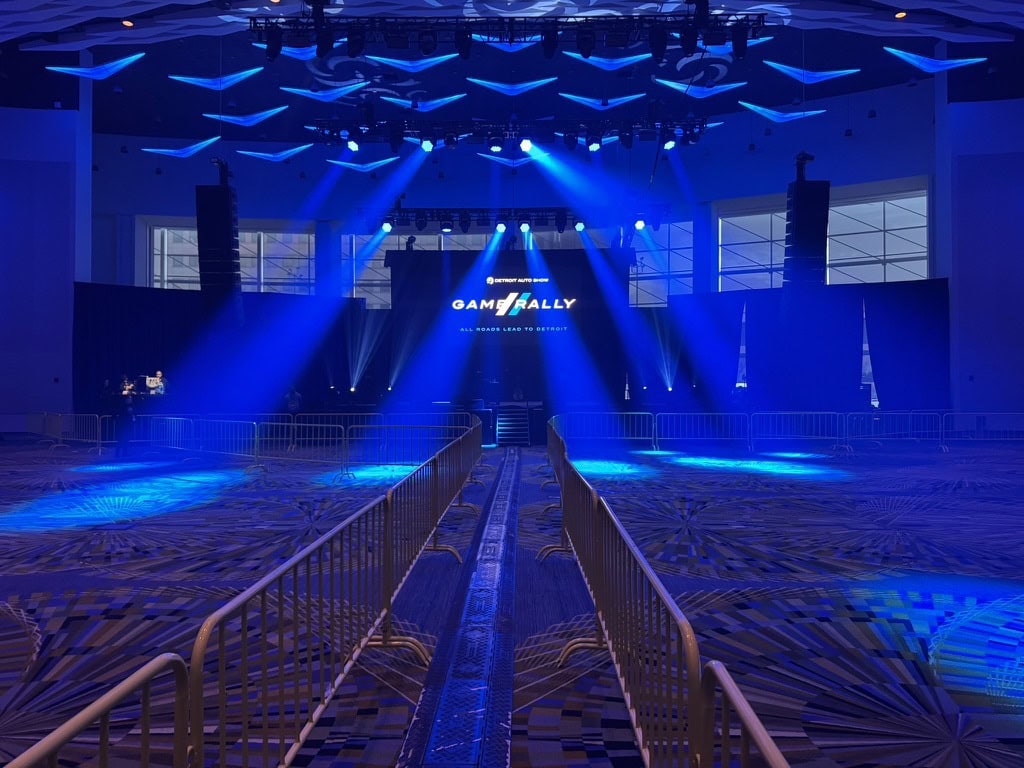
Every standout event begins with a vision—whether it’s a leadership summit meant to inspire, or a company-wide gathering designed to unite every employee. For over 30 years, Premier Creative Group has partnered with clients to bring those visions to life. Our role isn’t to reinvent your big idea, but to understand it, define what it takes to make it real, and unite every technical and creative element so your event unfolds exactly as you imagined.
The secret to a seamless event is a strong production plan. This working document transforms your vision and event brief into a clear, actionable roadmap: it details what your venue allows, what happens on stage minute by minute, the audio, video, lighting, and staging needs for every moment, who’s running each element, and how the show will be rehearsed and called. Equipment is just one component—the plan comes together by understanding the big picture. In this post, we’ll take you step by step through our template for building a winning event production plan.
Start With Your Event Objectives—Not the Gear
A strong event brief always starts with the “why” before the “what.” If you’re still writing your brief, check out our guide on what event planners need to know about RFPs—then come back to see what happens next. Here’s what we do once your brief lands on our desk.
We always begin with three foundational questions:
- What do you want attendees to think, feel, or do when they leave?
- Who is in the room, and who’s watching remotely?
- What kind of experience fits the moment—focused, high-energy, or formal?
Your answers shape everything that follows.
For example, if your audience is seated far from the stage, you’ll need IMAG (image magnification) to put presenters on big screens. Streaming or recording? You’ll want elevated lighting and camera work. An executive roundtable asks for a very different setup than a product launch. Your event’s purpose and audience drive every production choice.
Don’t worry if you don’t have every answer right away. “We don’t know yet” is a perfectly fine place to start—and helping you fill in the gaps is part of our job as your production partner.
Key Takeaway: Objectives, audience, and experience come first—they drive every other decision. Missing details are normal early on, and we’ll help you fill them in.
Know Your Venue’s Rules, Limits, and Opportunities
Every venue comes with its own set of opportunities—and restrictions. Before we design a single element, our team studies the space: room dimensions, ceiling height, and sightlines from every seat. We confirm rigging points (for lighting, speakers, and screens), verify available power and its placement, and plan how gear will move from the loading dock into the room. Time for load-in and load-out is carefully mapped out to avoid surprises.
We also dig into details that can catch planners off guard—like whether your venue has in-house AV (with its own rules about what services you can use) and whether there are union labor requirements that dictate who can do which work. These answers shape your crew and your budget, so it’s critical to get them early—not at load-in.
This is where experience really matters. As the preferred AV partner at Huntington Place in Detroit since 2014—including the Detroit Auto Show—we know how to navigate venue infrastructure under real show conditions. We bring that same deep-dive venue review to every project, in any city.
Key Takeaway: The venue sets the boundaries for your plan. Room size, rigging, power, access, AV and labor rules—these shape every part of your production.
Build Your Production Around the Run of Show
The run of show is your program’s minute-by-minute roadmap: who speaks when, when videos play, when music cues up, and how the room transitions from keynotes to panels. We build your production plan around the run of show—not a cookie-cutter equipment package.
For every segment, we dig into the details:
- How many people are on stage, and what mic does each need?
- Is the presenter using slides, video, or a live demo?
- Will there be transitions where music, lighting, and video need to hit together?
A panel, an awards show, and a product launch each require different production solutions—even in the same room.
Don’t worry if your run of show is still evolving. We’ll start with what you have and refine it together in pre-production. By developing the run of show and technical plan side by side, we ensure they stay perfectly in sync.
Key Takeaway: Your program drives your production. Walking through the run of show reveals what the stage, the tech, and the team need to deliver—every step of the way.
Identify the Technical Elements That Make Your Show Work
With the venue and program defined, it’s time to determine which technical elements your show needs—and how they fit together. For most corporate general sessions, this means:
- Audio: Room-matched speakers, wireless mics, monitors, and playback
- Video: LED walls or projection, scaled to fit the space and content
- Cameras & IMAG: Cameras that put presenters front and center on big screens
- Lighting: Stage lighting for presenters and video, plus ambient room lighting
- Staging & Scenic: The stage, set, and branded environment
- Playback & Presentation Management: Running slides, videos, and graphics in the right order
- Teleprompter: Helping presenters deliver their message naturally
None of these elements stands alone. Where you place screens affects where speakers can hang. Scenic design changes how lighting can be used. Camera angles change what your stage needs to look like. That’s why Premier Creative Group plans audio, video, lighting, scenic, and creative services as one system—and uses 3D pre-visualization so you can see the room before anything is built.
Key Takeaway: Every technical element is chosen to serve your room and your program. By planning everything as one system, we ensure your show runs smoothly.
Who Runs Your Show? Crew & Technical Roles
Even the best equipment is only as good as the people running it. Once the technical plan is set, we assemble the crew and assign roles: audio engineer, video team (for screens, cameras, and playback), lighting operator, stage manager (keeping presenters ready and on time), and show caller (directing the entire program). Larger shows may need more operators, while smaller ones combine roles—but every position is covered by a pro.
Our crews are a blend of in-house W-2 technicians and stage managers, plus trusted freelancers we’ve personally vetted—not anonymous subcontractors. That keeps every position accountable to one set of standards. Labor planning always takes your venue’s house AV and union rules into account.
This same approach travels with your show. For example, we’ve delivered consistent, high-quality production for a client across Detroit, Orlando, Las Vegas, and Nashville in one year—with the same team and standards at every stop.
Key Takeaway: Your crew isn’t an afterthought—it’s central to the plan. The right roles, matched to your program and venue, are what make an event work.
From Plan to Show: Pre-Production, Rehearsals & Show Calling
Pre-production is where your plan comes to life. We gather all content from presenters—slides, videos, graphics, walk-on music, scripts—and make sure every file is compatible with your screens and tech. All run-downs, production schedules, and scripts are managed in a central tool (like ShoFlo), so your team and ours are always on the same page.
Next, we translate the run of show into cue sheets—detailing every lighting, audio, video, and camera change, in order—so every operator knows exactly what happens and when. These cue sheets become the show flow that keeps your entire crew in sync.
Rehearsals let us test the plan in the actual space—presenters practice with mics, slides, and teleprompters, while the crew fine-tunes transitions and timing before the audience arrives. During the live event, the show caller keeps every department in sync, calling each cue from the first walk-on to the last applause. Afterward, we debrief together so your next event is even smoother. For more, see our timeline from first conversation to final load-out.
Key Takeaway: Collecting content, building cue sheets, and rehearsing are where potential problems get solved—before show day. Show calling keeps your well-planned program on time and on track.
Frequently Asked Questions
What is an event production plan?
An event production plan is the master document that translates your event vision and brief into something a crew can actually build and run. It covers the venue’s limits, the run of show, all audio, video, lighting, staging, and camera needs, the crew and their roles, and the full schedule for content, rehearsals, and show calling. Equipment is just one piece—strategy is the rest.
Do I need all the details before I contact a production company?
No! “We don’t know yet” is a normal answer at the start. You don’t need to have everything figured out before reaching out—helping you fill in the blanks and prioritize the right questions is a big part of our job as your production partner.
What is a run of show?
A run of show is your event’s minute-by-minute playbook: who’s speaking, when videos or music play, all transitions and breaks. The production team builds cue sheets from this, so every operator knows what to do and when. It usually starts rough and gets polished during pre-production.
Why does the venue matter so much to the production plan?
The venue sets the limits your plan has to work within. Ceiling height and rigging points determine what can hang overhead. Power, loading dock access, and load-in time decide what can be installed and how quickly. House AV rules and union labor requirements affect who can do what. Knowing these early means fewer surprises on show day.
What does a show caller do?
The show caller is the director of the live event. Working from cue sheets and the run of show, the show caller tells each department when to trigger lights, roll video, switch cameras, or bring up a mic. This keeps everyone in sync so transitions happen smoothly and the program runs just as rehearsed.
How is a production plan different from an equipment list?
An equipment list just tells you what gear is in the room. A production plan explains why each piece is there, how it connects to the rest, who operates it, and when it’s used in your program. Two equipment lists can look almost identical, but the plan behind them determines whether your event runs flawlessly or not.
Ready to Turn Your Vision Into a Show?
You bring the vision. We’ll listen, map out what it takes, and bring every technical and creative element together—so your event becomes a seamless, unforgettable show. Whether your brief is complete or a work in progress, your plan starts with a conversation.
One Team. One Vision. One Point of Accountability. Start planning your next event with Premier Creative Group.