
15
Jul 2026
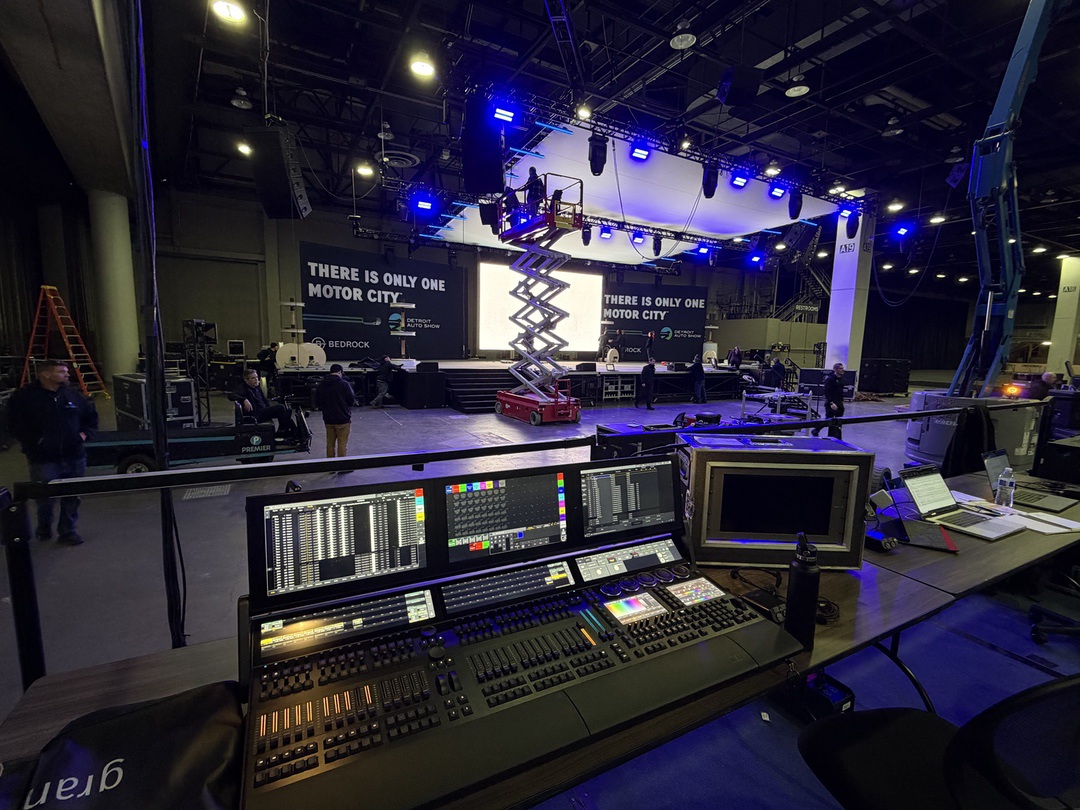
Every event planner has approved a general session AV quote that looked like a win — until show week. The screen that “fit the budget” turns out to be too small for the back of the room. The lone projector has no backup. The lean crew needs overtime to make the schedule. By load-out, the bargain bid has quietly become the most expensive line on the budget. The reason is simple: general session AV is priced on what you can see, but it is costed on what you can’t.
What Is General Session AV?
General session AV is the audiovisual production that powers the main room of a conference: the audio, video and LED walls, lighting, and scenic and staging behind the keynote, the plenary, and the opening and closing sessions where the whole audience gathers. It is the highest-stakes environment at any event: when something fails in the general session, everyone sees it at once. That single fact drives almost all the real costs in the room.
Key Takeaway: General session AV is the main-room production — audio, video, lighting, and scenic working as one. Because the whole audience is watching, it carries the least room for error and the most cost pressure of any space at your event.
What Actually Drives General Session AV Cost
Strip away the brand names and fixture counts, and general session pricing comes down to a handful of drivers. Knowing them makes every quote easier to read.
1. Room scale and sightlines. A bigger room needs more lighting to reach the stage, larger or additional screens so the back row can see, and more audio coverage so the back corner hears what the front row hears. Cost follows the size of the room, not the size of the audience alone.
2. Screen format and content. A simple slide deck and a multi-source broadcast look identical on a quote line that just says “LED wall.” They are not the same job. Resolution, screen shape, and the number of live sources feeding the LED video wall all affect the cost — choosing the right screen format is one of the biggest swing factors in the budget.
3. Redundancy. This is the line most cheap quotes skip. A general session built with redundant gear — a backup projector, a spare switcher, a second audio path — costs more than one without. The difference is whether a single failure stops the show or goes unnoticed.
4. Labor and the schedule. Crew size is set by the install timeline, not just the gear. A tight load-in window or an overnight changeover needs more hands to hit the call. A quote that looks lean on labor often assumes everything goes perfectly.
5. Integration. When audio, video, and lighting are designed and run by a single team, the systems communicate with each other and the cues land. When they come from separate vendors, someone has to make them work together on-site — and that someone is usually billed by the hour.
Key Takeaway: General session cost is driven by room scale, screen complexity, redundancy, labor, and integration — not by the brand of gear on the line items. Two quotes can list the same equipment and price completely different shows.
The Costs That Don’t Show Up on the Quote
The drivers above are at least visible if you know to look. These are the ones that arrive after you have signed.
Change orders. The most common surprise. The original quote was built on assumptions, and when the run-of-show changes — an extra camera, a longer rehearsal, a new sponsor reel — every change is billed against a price you no longer control.
Dead time and overtime. If the install runs behind because the plan was thin, the crew stays late. Overtime is the budget line nobody quotes, and everybody pays.
The integration gap. Two vendors who each did their job correctly can still produce a session that does not work, because no one owned the seams between them. The audio handed off to a separate video team is where small problems become show problems — and fixing that on show day is real money that never appeared on the original bid.
Key Takeaway: The cheapest-looking quote often wins by omitting the very things that protect your show — redundancy, realistic labor, and ownership of the integration. Those costs do not disappear; they move from the quote to the invoice.
Why the Cheapest Quote Is Often the Most Expensive
Here is the decision framework. A low general session AV quote is usually low for one of three reasons: it left out redundancy, it under-counted labor, or it assumed a simpler show than you are actually producing. None of those costs disappear — they just move from your control to the vendor’s. A complete quote that looks higher on paper is often the one that holds its number through show day. You are not buying gear. You are buying a result you can count on.
Key Takeaway: Price the whole show, not the line items. The lowest bid usually wins by removing protection you will end up paying for anyway — in change orders, overtime, or a failure on stage.
How to Read a General Session AV Quote
Run any quote through these questions before you compare prices:
1. Does it include redundancy for the screen, the switcher, and the audio? If not, what happens when one fails?
2. Is the labor tied to a specific load-in and load-out schedule, or is it a round number?
3. Does the screen line specify resolution, size, and number of live sources — or just say “LED wall”?
4. Who owns integration between audio, video, and lighting — one team, or is that your job on site?
5. What triggers a change order, and how are changes priced?
Key Takeaway: Two quotes can be thousands apart and describe entirely different shows. These five questions tell you which is which before you sign, not after.
What This Looks Like in Practice
We have produced general sessions for everything from a regional sales meeting to a multi-day national conference, and the pattern holds across all sizes. As the preferred production partner at Huntington Place Detroit since 2014, we have run convention general sessions in one of the most demanding environments in the country, where the back-of-house realities — like managing audio frequencies in a crowded convention center — are exactly the hidden complexity a thin quote ignores. That same discipline travels to any venue nationwide. The room changes. The economics don’t.
Key Takeaway: A general session is unforgiving in any venue. The protection against hidden cost is the same everywhere — one accountable team that planned the room, not a stack of separate quotes that meet for the first time at load-in.
Frequently Asked Questions
What is included in general session AV?
At minimum, general session AV covers the audio (speakers, microphones, and mixing), video (screens or LED walls, cameras, IMAG, and content playback), lighting (stage and room), and the staging and crew to run it all. A complete package also includes redundancy and the labor to install and strike on schedule, which is exactly where lean quotes tend to cut.
Why are general session AV quotes so different from each other?
Because they often describe different shows. One quote may include backup equipment, full integration, and labor matched to your schedule, while another assumes a simpler setup with no redundancy. Comparing the bottom-line numbers without comparing what is in them is how budgets get blown.
What is the most common hidden cost in general session AV?
Change orders. When the original quote is built on loose assumptions, every change to the run-of-show is billed at a rate you no longer control. A detailed plan up front is the cheapest insurance against change-order creep.
Do I really need backup equipment for a general session?
For the main room, yes. The general session is the one place where a single failure is seen by your entire audience at once. Redundancy is the difference between a quiet save and a public outage in front of every attendee.
Does using one production partner actually save money?
Often, yes – not on the quote, but on the total. One team that designs and runs audio, video, and lighting together removes the integration gaps, overtime, and finger-pointing that drive real-world costs above the original bid.
Plan a General Session That Holds Its Number
The best way to control general session cost is to design the whole room with one accountable team from the start, so the quote you approve is the show that actually loads in — no gaps, no surprises, no bargain that turns into a bill. When you are ready to plan a general session that delivers on its promises, Start Planning Your Event.