
15
Jun 2026
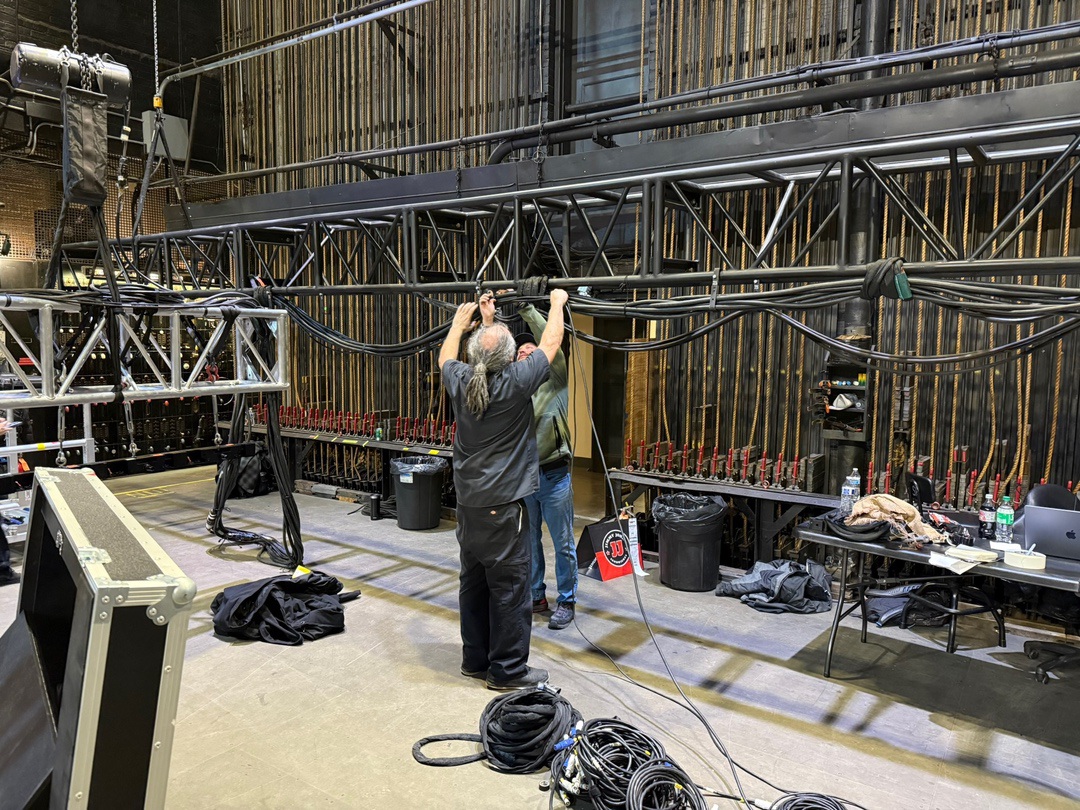
The annual sales kickoff is the one event each year where your entire revenue team is in the same room, expecting to walk out aligned, energized, and equipped for the year. The CFO is in the back row counting the cost. The CRO is on stage asking 600 reps to commit to a number. The product team is loading 18 months of roadmap into 90 minutes. And the production team has four hours of load-in to make all of that look effortless.
Sales kickoff productions live or die in the weeks before the event, not on the day. The shows that come together cleanly are the ones where the production partner started the conversation early, owned the integration across disciplines, and arrived on site with one plan that everyone signed off on. The shows that feel chaotic are the ones where six vendors met for the first time on load-in day.
This article walks through what goes into a sales kickoff production — the components, the pitfalls, and what an integrated production partner actually delivers across an SKO engagement.
What Is a Sales Kickoff Production?
A sales kickoff production is the full live-event production of a company’s annual or semi-annual sales kickoff (SKO) — the executive general sessions, breakout training tracks, awards ceremony, and any social environments that make up the multi-day program. Production scope typically includes audio, video, lighting, scenic, content delivery, IMAG, and on-site crew, all coordinated under one production plan.
For most enterprise sales organizations, the SKO is the single largest internal-facing production of the year. The audience is your own people, but the production standards are the same as any external corporate event — because the experience your reps walk out with sets the tone for how they sell for the next twelve months.
Key Takeaways:
- A sales kickoff production covers all live-event disciplines for the SKO program.
- The audience is internal but the production bar is the same as external events.
- The experience the reps walk out with shapes the year ahead.
The Core Components of a Sales Kickoff Production
A typical SKO production includes seven distinct production scopes, each of which has to integrate with the others:
General session production. Main-stage AV for the executive opens, product unveils, and big-room moments. Includes PA design, IMAG with multi-camera coverage, LED walls or projection, and stage lighting tuned for both the audience and the camera. The general session is usually where the show’s most expensive minutes live.
Breakout training rooms. Sales process, product enablement, and role-specific training tracks that run in parallel. Each breakout needs its own AV package — display, audio, content delivery — coordinated to the master schedule so transitions between general session and breakouts are clean.
Awards ceremony or recognition program. Top-performer recognition, President’s Club, Rookie of the Year — these are the moments your reps will photograph and send home. Production has to support the brand of the moment, not just the function.
Content production. Pre-event sizzle reels, transition videos, executive intro packages, and on-site graphics packages. Often built and locked weeks before the show, then operated live during the program.
Scenic design. Custom scenic environments for the general session, breakout signage, and any off-stage activations. Scenic design has to fit the room, the lighting, and the camera coverage — which is why we plan it alongside AV, not after.
RF coordination. Wireless mics for presenters, in-ear monitors for awards walk-on music, comms for crew. RF coordination is invisible when it works and disastrous when it doesn’t, especially in venues sharing spectrum with other shows.
On-site execution and showcalling. The lead production team that runs the show day-of — calling cues, managing transitions, and solving problems in real time without breaking the experience for the room.
Each of these scopes affects every other one. That’s why the integrated model matters more for SKOs than for almost any other event type.
Key Takeaways:
- SKO production has seven distinct scopes that all interact with each other.
- Scenic affects lighting, lighting affects camera, content affects sequencing — none of them are separable.
- Integration is what keeps the show clean across all of these scopes.
How an Integrated Production Partner Changes the SKO
When a sales kickoff is scoped as a stack of separate vendors — audio from one company, video from another, scenic from a third — the conflicts don’t surface until load-in. A pre-recorded executive video runs at the wrong aspect ratio because the LED wall vendor specced the panels after the content team finished the edit. The awards ceremony lighting cues clash with the IMAG coverage because the lighting vendor never saw the camera plot. The breakout schedule doesn’t account for an unforeseen reset between sessions because nobody owned the master timeline.
These aren’t edge cases. They’re the predictable cost of fragmenting a production scope across vendors who never meet until load-in.
An integrated production partner takes that math off the table. Audio, video, lighting, scenic, content, and execution are owned by one team, planned in one room, and signed off as one production plan. The exec video gets specced against the actual LED wall before the edit is locked. The awards lighting plot is reviewed against the camera plan. The master schedule includes every transition, every reset, every walk-on. Decisions that would normally surface as “that’s not our scope” conversations on load-in day get handled inside one accountable structure.
Premier Creative Group has been delivering integrated SKO production this way for 30+ years, across 35+ states. We model the show in 3D pre-visualization six weeks before load-in, lock the production plan with every discipline at the table, and arrive on site with one team that owns the entire experience.
Key Takeaways:
- Integrated SKO production puts every discipline in the same plan.
- Conflicts that fragmented vendor models surface at load-in are caught in pre-production.
- Pre-visualization makes the show on paper match the show on the floor.
Common SKO Production Pitfalls and How to Avoid Them
Five recurring pitfalls show up in sales kickoff productions, regardless of company size:
Starting the production conversation too late. The most common failure mode. SKO planning kicks off in October for a January show, but the production partner doesn’t get scoped until December. By then, scenic options are limited, venue dates are locked, and pre-visualization is compressed. Avoid by bringing production into the conversation as soon as the venue and dates are confirmed.
Treating content as separate from production. Content teams build executive videos and product reveal packages in vacuum, then hand them to production at the last minute. The result: aspect ratio mismatches, audio levels off, branding inconsistent with on-stage scenic. Avoid by integrating the content workflow into pre-production from the start.
Skipping the run-through. Especially for smaller SKOs, the team often plans to run it live. The general session, awards ceremony, and breakout transitions all have failure modes that only surface in rehearsal. Avoid by budgeting time and crew for at least one full general-session rehearsal.
Underestimating breakout production complexity. Breakouts feel simple — a screen, a microphone, some chairs. In practice, six parallel breakouts with content delivery, audio, and a coordinated master schedule is its own production challenge. Avoid by treating breakout production as part of the same scope as general session, not a separate concern.
Specifying gear instead of outcomes. Some RFPs spec a 40-foot LED wall, a specific lighting console, a specific audio rig. The right approach is to spec the outcome — audience size, viewing distances, IMAG requirements, brand standards — and let the production partner spec the gear that delivers that outcome. We’ve written about LED wall pixel pitch — the wrong specification can drive thousands of dollars of waste while underdelivering on the experience.
Each of these pitfalls is a planning problem, not an execution problem. Which is why the production partner conversation needs to start with planning, not with gear lists.
Key Takeaways:
- SKO production failures are usually planning failures, not execution failures.
- Bringing production into the conversation early is the highest-ROI decision you can make.
- Spec outcomes, not gear — the partner specs the gear that delivers the outcome.
When to Start Planning Your SKO Production
The honest answer for most enterprise SKOs: bring the production partner in at the same time as the venue and the date — typically 6 to 9 months before the event. That timeline allows for:
A real discovery phase that aligns on the SKO’s strategic objective, not just the run-of-show.
Integrated scenic and AV design with enough time to iterate before fabrication starts.
3D pre-visualization is locked at least 6 weeks before load-in, so executives and stakeholders see the show before anything is built.
A pre-production planning phase that documents every transition, every cue, every contingency.
Content workflow alignment, so the executive videos and product reveals are specced against the actual production environment.
Smaller SKOs (under 200 attendees) can sometimes compress this to 3 to 4 months. Larger productions (500+ attendees with multi-day programs and full awards ceremonies) typically need the full 9 months to do it well.
Key Takeaways:
Most enterprise SKOs benefit from a 6 to 9 month production planning runway.
Smaller programs can compress, larger programs cannot.
The early conversation is the highest-leverage move you’ll make on the show.
Frequently Asked Questions About Sales Kickoff Production
What is a sales kickoff production?
A sales kickoff production is the full live-event production of a company’s annual or semi-annual sales kickoff event — including general sessions, breakout training rooms, awards ceremonies, and content delivery. Production scope typically covers audio, video, lighting, scenic, content, RF coordination, and on-site crew, owned end-to-end by an integrated production partner.
How early should we start planning the SKO production?
For most enterprise SKOs, 6 to 9 months before the event. That allows for a real discovery phase, integrated design with iteration time, 3D pre-visualization locked 6 weeks before load-in, and full pre-production planning. Smaller SKOs (under 200 attendees) can compress to 3 to 4 months; larger multi-day programs typically need the full 9 months.
What’s the difference between SKO production and a generic corporate event?
The audience is internal — your own sales team — but the production standards are the same as any major external event. SKOs also have unique scopes that other corporate events don’t always include: awards ceremonies, parallel breakout training rooms, and pre-event content packages built specifically for the program. The integration challenge is higher, not lower, than a typical corporate event.
What does integrated SKO production actually mean?
Integrated production means audio, video, lighting, scenic, content, and on-site execution are all owned by one team and planned together — instead of being scoped to separate vendors who only meet at load-in. The integrated model is built to remove the conflicts that fragmented vendor stacks generate during the four hours before doors open.
Can an SKO production be delivered across multiple cities?
Yes. Multi-city SKOs and roadshow-style sales kickoffs are common at large enterprises with regional sales teams. The same integrated production team can travel with the program across cities, maintaining consistent experience and brand standards from venue to venue.
How do we get started with Premier on our next sales kickoff?
Use the Start Planning Your Event button below or call (248) 607-0444. We start every engagement with discovery — your strategic objectives, audience, and constraints — before any equipment gets specified. The earlier we’re in the conversation, the more value the integrated production model delivers for your program.
Plan Your Next Sales Kickoff With a Real Production Partner
If your next sales kickoff is the kind where the experience your team walks out with matters, the integrated production model is what you’re looking for. Premier Creative Group has been delivering integrated event production for 30+ years, across 35+ states.
We’d love to talk through what your show needs. Start planning your event, or call us at (248) 607-0444 to start the conversation. Visit premierav.net to see more of our work.
About Premier Creative Group
Premier Creative Group is a national event production partner delivering audio, video, lighting, scenic, and creative as one integrated team. With 30+ years of live event production and as a preferred AV partner at Huntington Place Detroit since 2014, we’ve delivered events across 35+ states for corporate, association, and trade show clients. Our home is Metro Detroit; our reach isn’t.