
22
Jun 2026
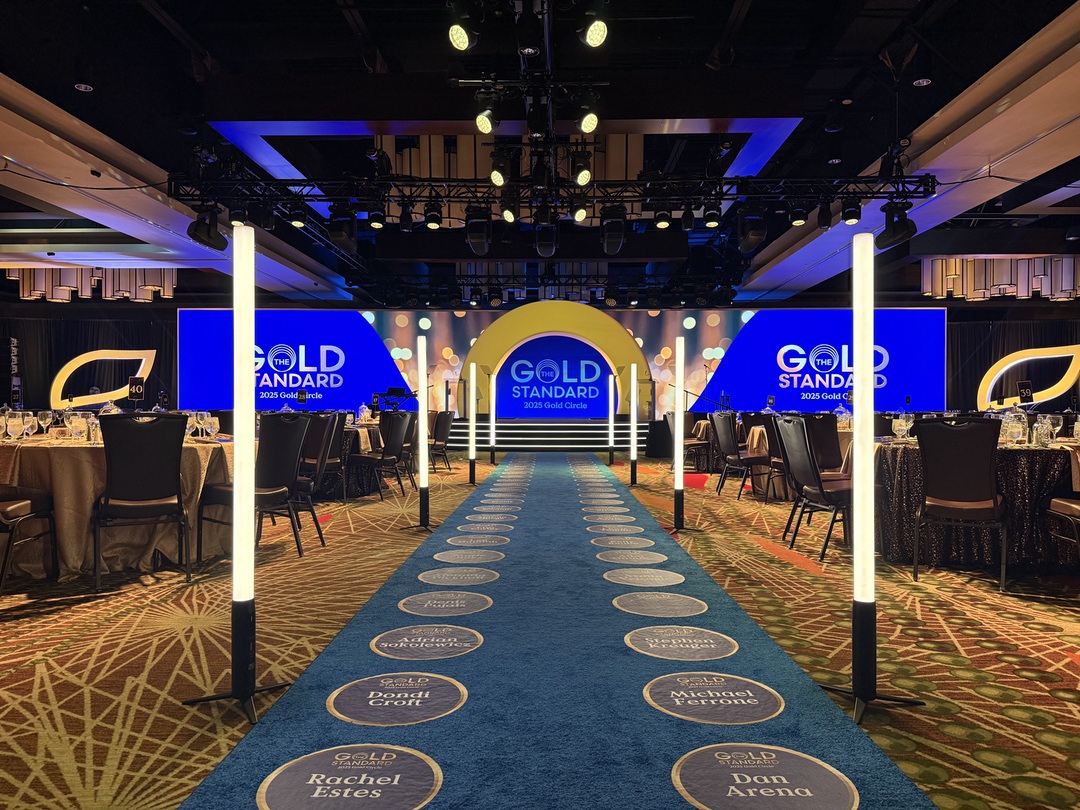
TL;DR: Great gala lighting is not about more fixtures — it is about three core layers, a few accent tools, and a plan that follows your show flow. This guide covers how we light corporate galas, the best practices that keep a room from looking flat, and five Detroit rooms we produce in when the gala is local.
Every gala has the same problem at four o’clock on show day: the room looks like a banquet hall with round tables in it. Six hours later it has to look like the most important night on your organization’s calendar. The thing that closes that gap is not the centerpieces or the linens — it is the light, and specifically a lighting design that moves with your program instead of just sitting on it. We produce corporate galas at venues nationwide, and here is how we think about lighting one.
What it means to light a gala
Lighting a gala is the deliberate use of stage, wash, and accent light to shape how a room feels and how a program reads — from the first guest walking in to the final load-out. It is not the venue’s house lighting, which is built for setup, service, and safety, and it is not decor. It is production. Done well, most guests never consciously notice it; they simply feel that the night looked expensive and ran smoothly.
The three layers every gala needs
Almost every strong gala look is built from three layers of light working together. You will not be running the board, but knowing the vocabulary makes every planning conversation faster.
Key (front) light — the light on faces. It is what lets guests see expressions and what cameras and IMAG (the large screens that magnify the stage so the back of the room can see) need to capture a program cleanly. Too little and the stage looks flat; too much and it feels like an interrogation.
Wash — broad, even color across the stage, the walls, or the whole room. Wash carries the mood and the brand color. Modern LED wash fixtures change color instantly and run cool, which matters in tight or heat-sensitive rooms.
Backlight — light from behind the speakers or the stage. It separates people from the background and gives the picture depth. It is the difference between a flat snapshot and a dimensional image on screen.
Get these three balanced and the room already reads as produced. Most “why does this look flat?” problems trace back to a missing backlight or a key light that is too dim for the cameras.
The accent layer: where a room becomes the event
Once the three core layers are set, accents do the personalization:
Uplighting — fixtures placed on the floor washing walls and columns in color. The fastest way to turn a neutral ballroom into your event.
Pin spots — a tight, controlled beam that makes a centerpiece, cake, or auction item pop without lighting the whole table.
Gobos — a stencil placed in front of a light to project a logo, monogram, or texture onto a wall, floor, or stage.
Color temperature — matching (or deliberately contrasting) the room’s existing warm chandeliers and sconces so your light and the architecture read as one intentional look rather than two competing ones.
Lighting the show flow
This is where lighting earns its budget. A gala is not one scene — it is a sequence, and the light should move with it. Here is a typical corporate gala flow and how lighting supports each beat:
Arrivals and reception — bright, warm, and social. High uplight saturation, energy in the room, faces lit for step-and-repeat photos.
Room open — a transition cue. Dim the reception space and bring the ballroom up so the room itself pulls guests toward their seats.
Welcome and dinner — softer wash, warmer color, lower overall intensity so conversation and food feel intimate, while enough key light stays on stage for the emcee.
Program and awards — stage looks sharpen: full key plus backlight for IMAG, room wash drops so attention goes forward. Preset looks per segment let the showcaller call cues cleanly.
The mission moment, or the ask — the most important ninety seconds of the night. Lighting goes quiet and focused: the room comes down, a single warm wash or pin holds the speaker, and screen content is supported, not fought. This is lighting amplifying pacing and emotion — the ask lands harder in a room that has visibly settled.
Entertainment and dance — release the energy: saturated color, movement, beat-driven looks. The contrast with the emotion is the entire point.
Load-out — house lights up. The night is over for guests; the work begins for the crew.
The lesson: a great lighting design is a script, not a setting. When the light changes on cue with the program, the night feels directed. When it does not, even a beautiful room feels static.
Gala lighting best practices
A short checklist we run on every gala, regardless of city or venue:
Design early. Lock the concept once the room and run-of-show are set, with final design four to six weeks out. Early design is what makes pre-visualization possible, so you see the room before it is built.
Light faces for the cameras. If there is IMAG or a livestream, key light is non-negotiable. A dark speaker reads as a production mistake to every remote viewer.
Match the room’s color temperature. Fight the venue’s existing warm chandeliers and the whole room looks off on camera; design with them and it looks deliberate.
Respect venue constraints. Museums and historic rooms limit heat, UV, and fixture placement. Low-output LED makes this far easier than it used to be, but it has to be designed in, not discovered at load-in.
Build looks around the show flow. One preset per program beat, handed to the showcaller as cues. Improvised lighting always looks improvised.
Plan it with the rest of production. Lighting, video, audio, and scenic should be designed together by one team, so the approved design is the one that actually shows up.
Five Detroit rooms we put a gala in
When the gala is local, these are rooms we know and produce in. The approach above does not change room to room — only how it is applied.
Huntington Place — Detroit’s riverfront convention center, built for scale: a 600-plus-person dinner with a full stage and IMAG, and our deepest venue relationship and proving ground.
The Detroit Institute of Arts — a gala under the Rivera murals is hard to top. Conservation rules shape the lighting design, and we work within them rather than around them.
The Detroit Masonic Temple — the Crystal and Fountain ballrooms are cathedral-scale and reward bold backlight and big-room wash.
The Fox Theatre — one of the country’s grandest restored theatres. A seated program or awards gala here is pure spectacle, and the architecture takes light beautifully.
The Fillmore Detroit — a flexible, dramatic room beside the Fox, ideal for a gala that wants real concert energy in its entertainment block.
Not in Detroit? The approach does not change. We produce corporate galas at venues nationwide, and the design process is identical whether the room is here or two time zones away.
Plan your gala lighting with one accountable team
The room gives you the potential. The lighting design realizes it — and the show flow is what turns a lit room into a directed night. Whether your gala lands at one of these Detroit rooms or a ballroom across the country, the approach is the same: design it early, build the looks around your program, and run it with one team that owns the whole picture, from first conversation to final load-out. When you are ready, Start Planning Your Event.
Frequently asked questions
What is the difference between gala lighting and the venue’s house lights?
House lights are built for setup, service, and safety — even, functional, and unflattering on camera. Gala lighting is designed for the program: it shapes faces for IMAG, sets color and mood, and changes through the night as the dinner becomes a show becomes a dance.
How early should we design gala lighting?
The earlier the better. A practical target is final design four to six weeks out, with the concept roughed in as soon as the room and run-of-show are set. Early design is what lets us pre-visualize the looks and avoid surprises at load-in.
Can you match our brand colors and project our logo?
Yes. LED wash fixtures hit specific brand colors directly, and a custom gobo projects your logo or monogram onto a wall, floor, or stage.
Do historic or museum venues limit what lighting you can use?
Yes, and it varies by venue. Spaces like the Detroit Institute of Arts carry conservation rules covering heat, UV, and fixture placement; historic theatres and ballrooms often have their own restrictions. We design within each venue’s requirements, and modern LED fixtures make that far easier than it used to be.
Do you only produce galas in Detroit?
No. Detroit is home base and a deep proving ground, not the limit of where we work. We produce corporate events and galas at venues nationwide.