
01
Jun 2026
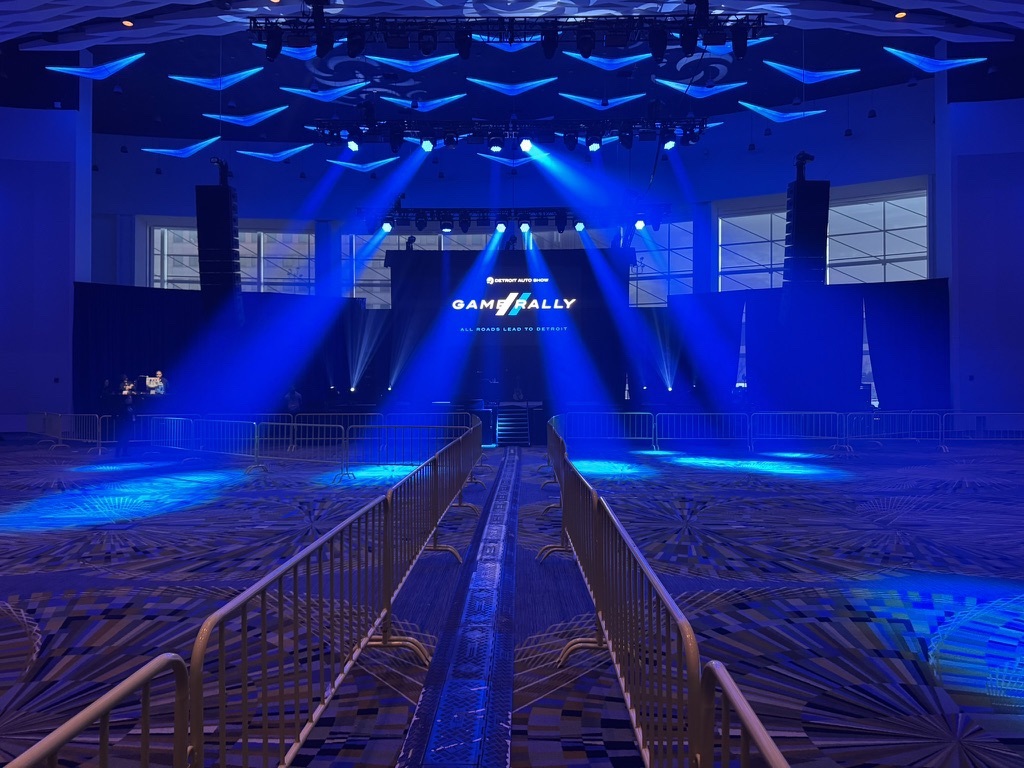
Sponsorship sales for live events are fundamentally a visualization problem. A sponsor committing to a naming-rights position on a general session stage, or a brand investment in a registration area activation, is making a financial decision based on what the opportunity will look like in a room that doesn’t exist yet. The better you can help them see that outcome before they commit, the stronger your close rate and the more likely you are to deliver an activation that actually reflects what was sold.
3D pre-visualization renders have become one of the most practical tools in the sponsorship sales toolkit for exactly this reason. Rather than asking a sponsor to imagine their logo on a stage, you show them a photo-realistic rendering of the stage with their logo on it, lit the way it will be lit, in the venue they’re considering, at the scale it will actually appear. The conversation shifts from abstract to concrete, and the sponsor’s internal approval process becomes significantly easier.
What Is Sponsorship Pre-Visualization?
Sponsorship pre-visualization is a 3D render of a sponsored brand environment — main-stage logo placement, branded backdrops, registration area activations, sponsor experience zones — produced before fabrication or load-in begins. The render shows the activation from the audience’s perspective, in the actual venue, at the actual scale, under the actual lighting conditions of the production.
Premier Creative Group integrates pre-visualization into production planning for events across 35+ states, with 30+ years of live event experience and a preferred AV vendor since 2014 at Huntington Place Detroit. Here’s how pre-viz works in a sponsorship sales context and what it delivers for both planners and sponsors.
Key Takeaway: Sponsorship pre-viz is a 3D render of the branded environment, produced before fabrication. It shows what the activation will look like at audience-perspective scale, in the actual venue, under the actual lighting.
Why Sponsors Struggle to Commit Without Visual Proof
Sponsorship decision-makers are rarely event production specialists. They’re marketing directors, VP-level brand leaders, or executive teams whose primary job is protecting brand standards and demonstrating ROI on marketing spend. When you present a sponsorship opportunity as a diagram on a floor plan or a line item in a prospectus, you’re asking them to do a visualization job they aren’t equipped to perform accurately.
The gap between what a planner sees in their head when they describe a “branded main stage position” and what a sponsor’s marketing director interprets from that description is real and consequential. Sponsors who commit to an activation based on an imprecise mental model arrive on-site with expectations that don’t match the production, which creates post-event friction that makes renewal conversations harder.
Pre-visualization closes that gap at the front of the process rather than the back. A rendered environment showing the sponsor’s exact branding, in the venue’s actual dimensions, with the production’s actual lighting environment, gives both parties a shared reference point. When the sponsor approves the render, they’ve approved the activation. When the production executes the render, it delivers what was sold.
Key Takeaway: The gap between what a planner describes and what a sponsor understands creates post-event friction. Pre-visualization renders create a shared visual reference before commitment, making both the sales process and the delivery more accurate.
What Pre-Viz Renders Show That Floor Plans Cannot
A standard event floor plan is a two-dimensional overhead view that shows space allocation, traffic flow, and general placement. It’s essential for logistics planning but nearly useless for helping a sponsor understand what their brand investment will look like in the room.
Pre-visualization renders show the environment from the perspective of the audience. They show what a speaker’s stage looks like from the third row of the general session. They show how a branded entry archway reads at eye level as attendees walk in from the registration area. They show what an LED wall sponsorship looks like when the room lights come up versus when they’re dimmed for a keynote. They show the difference between a 10-foot branded backdrop and a 20-foot one.
For productions that use 3D pre-viz as a planning tool, the rationale for investing in pre-visualization before fabrication begins covers the broader case for rendering as a production insurance tool. The sponsorship sales application is one of the most commercially valuable use cases, because the renders that protect a production budget from on-site surprises are the same assets that close sponsorship agreements months before load-in.
A well-executed pre-viz package for a sponsored event might include a render of the branded general session stage from multiple sightline positions, a render of the sponsored registration area or pre-function space, and a render showing the sponsored experience area during a specific moment in the event program — like cocktail hour lighting or a product reveal moment.
Key Takeaway: Pre-viz renders show what floor plans cannot — the audience’s perspective, lighting conditions, and brand scale in three-dimensional context. Those are the variables sponsors are actually evaluating when they commit to an activation.
Using Pre-Viz in the Sponsorship Prospectus
Pre-visualization renders can be incorporated into a sponsorship prospectus at multiple points in the sales cycle. At the early-stage prospecting phase, approximate renders showing what key sponsorship positions will look like help a sponsor understand the tier of visibility their investment purchases. At the proposal stage, customized renders showing the sponsor’s actual branding in the environment serve as closing tools.
The most effective approach is to produce a set of base renders showing key sponsorship positions from the most compelling vantage points, then customize those renders with each prospective sponsor’s logo, brand palette, and any messaging they’ve indicated is priority. For an annual conference with three or four sponsorship tiers, this means a relatively small initial rendering investment that can be customized efficiently for each prospect.
For venue-specific sponsorships, renders that are recognizably set in the actual venue are significantly more persuasive than generic event renderings. A sponsor whose brand is being placed in a specific venue responds differently to a rendering that clearly shows the venue than to a generic ballroom rendering with a logo dropped in. The specificity communicates that the production team has thought seriously about the activation, not just the placement.
Key Takeaway: Renders customized with a sponsor’s actual branding are closing tools, not just planning documents. A small investment in customization for each prospect converts faster than generic positioning diagrams.
Pre-Viz as a Tool for Sponsor Activation Design
Beyond the sales process, pre-visualization serves sponsors who are actively designing their activation experience. A brand that has committed to a general session stage sponsorship may want to explore several configuration options before settling on the final design — different logo placement scales, different background treatments, different lighting color scenarios.
Iterating on those design choices in a rendering environment costs a fraction of what it costs to discover the wrong answer on load-in day. A sponsor’s brand team can review multiple options, provide feedback to the production designer, and arrive at a finalized design that their internal team has approved before any fabrication begins.
This iterative design process is also where the integration between scenic design and AV production becomes visible in the render. A branded stage backdrop that looks striking in the rendering but creates a hot spot behind a presenter when the key light is added can be adjusted in the design phase. A sponsor logo positioned at the top of a scenic tower might compete with lighting fixtures or rigging hardware in the actual space. Pre-viz surfaces those conflicts visually before they become problems.
For productions that combine scenic design and technical AV under a single production scope, this kind of integrated review is a natural part of the planning process. The integrated production model is what makes pre-viz iteration efficient — every discipline reviewing the render together, in the same room, before anything ships.
Key Takeaway: Pre-viz isn’t just a sales tool — it’s an iterative design surface where sponsors and production teams refine the activation before fabrication. The integrated production model is what makes the iteration loop efficient.
Frequently Asked Questions About Pre-Viz and Event Sponsorships
How accurate are pre-visualization renders compared to the finished production?
High-quality pre-visualization renders, produced from accurate venue dimensions and production documentation, closely match the finished environment. The more detailed the production documentation, the more precise the render. Renders should be understood as high-fidelity approximations, not pixel-perfect predictions, but experienced planners find them reliable enough to use as client approval tools.
When in the event planning process should pre-viz renders be produced?
Renders used in sponsorship sales should be produced as early as possible — typically before the sponsorship prospectus is finalized. The production team needs enough venue and design information to produce an accurate render, but that information is often available several months before load-in.
Can renders be used as approval documents for sponsors?
Yes. Many production teams use a formally approved render as part of the sponsorship agreement documentation, establishing a shared visual reference that both the sponsor and the production team can point to when confirming that the on-site execution matches what was sold.
How long does it take to produce a pre-viz render for a sponsorship position?
A single rendered vantage point of a defined stage or activation area can often be produced in a few days with the right design documentation. A multi-scene render package covering several sponsorship tiers and multiple sightline positions will take longer. Build render production time into your prospectus development timeline.
Does pre-viz replace the need for on-site brand review?
No, but it significantly reduces the number of surprises that require on-site adjustment. For first-time sponsor relationships, an on-site walk-through at the end of load-in remains valuable regardless of how thorough the pre-viz process was.
Can the same renders used in the prospectus be used for other marketing purposes?
Yes — and this is an underutilized benefit of the pre-viz investment. Renders showing a branded stage or activation area can be used in post-event reports to sponsors, in sponsor recruitment materials for the following year’s event, and in internal presentations to leadership demonstrating the production’s visual quality.
Sell the Sponsorship Before the Show Builds
Sponsorship sales and production planning are more connected than most event programs treat them. The earlier the production design is developed to a level of visual specificity, the earlier sponsors can evaluate real opportunities rather than abstract concepts, and the stronger the alignment between what was sold and what gets built.
Premier Creative Group designs and produces branded event environments across 35+ states, with pre-visualization integrated into the production planning process as a standard tool. Start planning your event, or call us at (248) 607-0444 to start the conversation. Visit premierav.net to see more of our work.
About Premier Creative Group
Premier Creative Group is a national event production partner delivering audio, video, lighting, scenic, and creative as one integrated team. 30+ years of live event production and the preferred AV partner at Huntington Place Detroit since 2014, we’ve delivered events across 35+ states for corporate, association, and trade show clients. Our home is Metro Detroit; our reach isn’t. Connect with us on LinkedIn, Facebook, or Instagram.