
24
Mar 2026
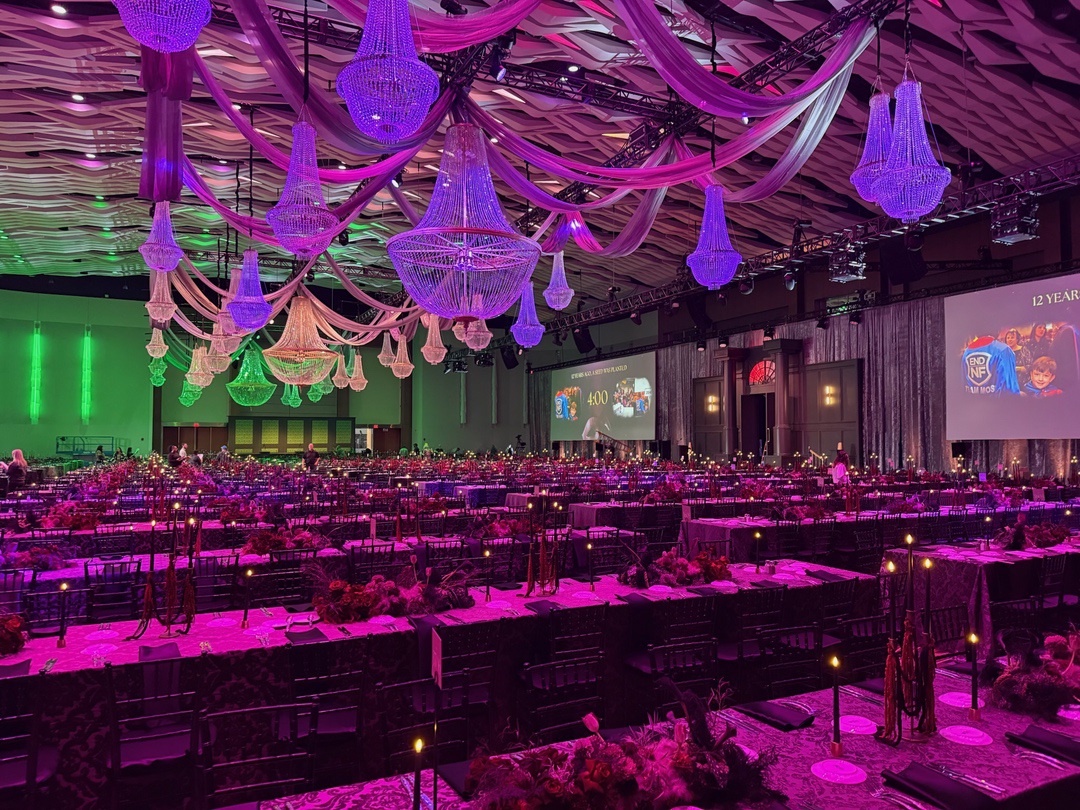
The keynote speaker stands at center stage, 3,000 attendees waiting for the product announcement. Thirty seconds into the presentation, the wireless microphone cuts out. Static fills the room. The speaker taps the mic, tries again, and the audio drops once more. Somewhere on the trade show floor below, an exhibitor just powered on their own wireless system, and both devices are fighting for the same frequency.
Wireless audio interference at conventions is not a random technical failure. It is a predictable consequence of crowding dozens or hundreds of wireless devices into shared radio spectrum without coordination. The good news is that proper frequency management prevents these problems. The challenge lies in understanding why interference happens and implementing systematic approaches to avoid it.
At large convention centers like Huntington Place, multiple events often run simultaneously. General sessions, breakout meetings, exhibitor presentations, and production communications all rely on wireless systems operating in overlapping frequency ranges. Without deliberate coordination, conflicts are not just possible but likely.
How Wireless Audio Systems Share Spectrum
Wireless microphones, in-ear monitors, intercom systems, and other audio devices typically operate in UHF television bands, currently channels 14 through 51 in the United States. This spectrum is also used by digital television broadcasters, creating the first layer of coordination complexity. Any wireless audio system must avoid frequencies occupied by local TV stations.
The second layer involves the devices themselves. When multiple wireless transmitters operate near each other, they interact in ways that create interference beyond their individual frequencies. This phenomenon, called intermodulation distortion, generates additional signals at mathematically predictable intervals above and below the original frequencies. Two transmitters can create interference products that affect a third device operating on what appeared to be a clear channel.
The math behind intermodulation means that adding devices does not create linear complexity. Two transmitters create a few intermodulation products. Ten transmitters create hundreds. Fifty transmitters create thousands of potential interference frequencies. Large conventions with hundreds of wireless devices across multiple exhibitors and production teams face genuinely complex spectrum environments.
Understanding this complexity explains why the simple approach of “finding a clear channel” fails in crowded venues. A frequency that scans clear before the show opens may become unusable when neighboring exhibitors power on their systems. A channel that works during setup may fail when the venue’s digital signage, Wi-Fi infrastructure, and LED walls begin operating at full power.
Key Takeaway: Wireless audio interference results from predictable interactions between devices sharing limited spectrum, making systematic coordination essential rather than optional in convention environments.
The Frequency Coordination Process
Professional frequency coordination follows a systematic process that accounts for all known spectrum users and calculates compatible frequencies for each device. The process requires information gathering, computational analysis, and verification testing.
Information gathering begins with identifying all wireless devices that will operate in the space. This includes production equipment like wireless microphones and in-ear monitors, but also extends to intercom systems, wireless video transmitters, assistive listening devices, and any other RF equipment. Each device has specific frequency ranges and operating characteristics that affect coordination.
The next step involves documenting fixed spectrum users that cannot be moved. Local television stations occupy specific frequencies that wireless audio must avoid entirely. Venue-owned systems like house intercoms and assistive listening may have permanently assigned frequencies. Neighboring events or venues may have their own coordination requirements that constrain available spectrum.
Computational analysis uses specialized software to calculate intermodulation products and identify frequency sets where all devices can operate without interfering with each other or creating harmful intermodulation. Programs like Shure’s Wireless Workbench, Sennheiser’s Wireless Systems Manager, and various third-party tools perform these calculations based on the specific equipment being coordinated.
The final step involves verification testing, sometimes called “war-gaming,” where calculated frequencies are tested in the actual RF environment. This hands-on process confirms that theoretical calculations hold up in real-world conditions and identifies any interference sources that were not accounted for in the planning phase.
Key Takeaway: Effective frequency coordination combines systematic information gathering, computational analysis of intermodulation, and real-world verification testing before events begin.
Convention Center Specific Challenges
Convention centers present frequency coordination challenges that exceed typical venue environments. The combination of scale, density, and multi-tenant operation creates uniquely complex spectrum conditions.
Scale matters because radio waves do not respect room boundaries. A wireless system in Hall A can potentially interfere with devices in Hall B, the ballroom above, or the loading dock below. Large convention centers may have active RF sources spread across hundreds of thousands of square feet, all sharing the same spectrum.
Density concentrates the problem. Trade shows pack exhibitors into close proximity, each potentially operating their own wireless systems. A single aisle might have ten booths running wireless microphones, audio playback systems, and wireless presentation clickers. The cumulative RF environment in these areas can become extremely challenging to manage.
Multi-tenant operation means coordination must account for activities beyond any single event’s control. The morning trade show, afternoon corporate meeting, and evening gala may each have their own production teams with independent equipment inventories. Without centralized coordination, each event plans in isolation and discovers conflicts only when systems fail.
Physical infrastructure adds additional complexity. LED walls generate RF noise across wide frequency ranges. Digital signage systems, lighting control networks, and building automation systems all contribute to the RF background. Venue Wi-Fi infrastructure operates in adjacent spectrum bands and can affect certain wireless audio systems.
Premier’s convention services at Huntington Place include coordination with venue systems and awareness of the specific RF challenges that the facility presents.
Key Takeaway: Convention centers compound frequency coordination challenges through scale that allows distant interference, density that crowds devices together, and multi-tenant operation that requires coordination across independent events.
Pre-Show Coordination Best Practices
Successful frequency management begins well before load-in. The advance planning phase establishes the foundation for interference-free operation during the event.
Start by documenting every wireless device that will operate during the event. This inventory should include manufacturer, model, frequency range, and intended use location for each unit. Production equipment under your direct control is straightforward to document. Equipment brought by exhibitors, speakers, or other vendors requires proactive communication to gather complete information.
Research the local RF environment before arriving at the venue. Television station databases identify which channels are occupied by broadcasters in the area. Previous events at the venue may have established frequency coordination files that identify known interference sources and successful frequency plans. Venue technical staff often maintain this institutional knowledge.
Coordinate with other production teams and exhibitors operating simultaneously. Share frequency assignments to avoid conflicts, or designate a single coordinator responsible for the entire venue during the event. Multi-vendor shows benefit greatly from centralized coordination even when it requires additional communication overhead.
Build flexibility into the frequency plan. Reserve backup frequencies for each critical system so that problems can be addressed quickly during the event. Identify which devices have the widest tuning ranges and can most easily move to alternative frequencies if conflicts arise.
Key Takeaway: Pre-show coordination requires complete device inventories, research into local spectrum conditions, communication with all RF users, and backup frequency plans for critical systems.
Real-Time Monitoring and Response
Even thorough pre-show coordination cannot anticipate every RF challenge. Real-time monitoring during events enables rapid response when unexpected interference occurs.
Spectrum analyzers provide visibility into the actual RF environment, showing what signals are present and how they change over time. Professional production teams monitor spectrum throughout events, watching for new signals that might indicate emerging interference problems. This proactive monitoring catches issues before they cause audible failures.
When interference occurs, systematic troubleshooting identifies the source. The affected device’s behavior often provides clues. Intermittent dropouts suggest marginal interference that might be addressed with antenna repositioning or small frequency adjustments. Complete signal loss indicates stronger interference requiring more significant changes.
Common interference sources at conventions include newly activated exhibitor wireless systems, news crews arriving with powerful transmitters, building systems cycling on, and even attendee devices like wireless presentation clickers. Identifying the source guides the appropriate response, whether adjusting your own frequencies, communicating with the interfering party, or implementing physical solutions like directional antennas.
Response speed matters because audio failures during presentations damage speaker credibility and audience engagement. Production teams should have documented procedures for frequency changes, spare equipment ready to deploy, and clear communication channels for coordinating responses across multiple team members.
Key Takeaway: Real-time spectrum monitoring enables proactive problem detection and rapid response when interference occurs, minimizing the impact of unexpected RF challenges.
Antenna Strategy and Signal Management
Frequency coordination addresses which channels devices use. Antenna strategy addresses how effectively those channels perform. Both elements contribute to reliable wireless audio operation.
Antenna placement affects signal strength and susceptibility to interference. Receivers should have clear line-of-sight to transmitters whenever possible. Placing receiver antennas at stage level rather than in a rack behind equipment improves reception and reduces the power transmitters need to maintain connection. Remote antenna systems extend this benefit by positioning antennas optimally while keeping receivers in convenient locations.
Directional antennas focus reception in specific areas, reducing pickup of interference from other directions. This strategy works well when transmitters operate in predictable locations, such as presenters on a defined stage area. The trade-off is reduced coverage for transmitters that move outside the antenna’s focus area.
Antenna distribution systems allow multiple receivers to share common antennas, reducing the “antenna farm” problem that occurs when many receivers cluster together. These systems also enable more strategic antenna placement than individual receivers permit.
Band-pass filters restrict the frequencies that reach receivers, blocking interference outside the desired range. This technique can dramatically improve performance in challenging RF environments by eliminating interference sources that coordination alone cannot address.
Key Takeaway: Strategic antenna placement, directional reception, distribution systems, and filtering complement frequency coordination to maximize wireless audio reliability.
Working With Exhibitors and Vendors
Trade shows present a particular coordination challenge because multiple independent parties operate wireless equipment without natural coordination incentives. Establishing communication and cooperation protocols improves outcomes for everyone.
Pre-show communication should inform exhibitors about frequency coordination requirements and processes. Many exhibitors do not realize that their wireless systems can affect neighbors or that interference problems have technical solutions. Education creates willingness to participate in coordination efforts.
Centralized coordination works best when someone has authority and capability to manage the entire spectrum environment. Show management or the general services contractor may designate this responsibility to their production team. Alternatively, major exhibitors can coordinate informally if communication channels exist.
When conflicts occur, approach other parties collaboratively rather than confrontationally. Most wireless interference results from lack of awareness rather than intentional disregard. Explaining the technical situation and proposing specific solutions typically resolves problems quickly. Escalating to show management may be necessary when direct communication fails.
Premier’s crewing services include experienced RF technicians who can coordinate across multiple exhibitors and production teams, ensuring that complex multi-vendor events maintain reliable wireless performance.
Key Takeaway: Exhibitor coordination requires proactive communication, education about interference mechanisms, and collaborative problem-solving when conflicts arise.
Equipment Considerations for Challenging Environments
Not all wireless equipment handles challenging RF environments equally. Equipment selection affects both coordination complexity and operational reliability.
Digital wireless systems offer advantages over analog systems in crowded spectrum environments. Digital transmission can operate successfully in narrower channel spacing and tolerates certain interference types better than analog systems. Many current professional wireless platforms have moved to digital transmission specifically for these benefits.
Wider tuning ranges provide more frequency options when coordination reveals limited availability in preferred bands. Equipment that can tune across multiple TV channels offers significantly more flexibility than equipment locked to narrow frequency ranges.
Automatic frequency selection features help manage dynamic RF environments where conditions change during events. These systems monitor spectrum conditions and switch to backup frequencies when interference affects the current channel. The trade-off is reduced human control over specific frequency assignments.
Higher-quality receivers with better selectivity reject adjacent-channel interference more effectively than budget equipment. This selectivity margin provides headroom that can make the difference between reliable operation and intermittent problems in marginal conditions.
Key Takeaway: Equipment selection influences coordination complexity and operational reliability, with digital transmission, wide tuning ranges, and quality receivers providing advantages in challenging environments.
Planning Your Convention Audio Strategy
Reliable wireless audio at conventions requires planning that begins well before the event. Premier Creative Group provides frequency coordination expertise for events at Huntington Place and throughout Southeast Michigan.
Our production teams conduct pre-show spectrum analysis, coordinate with venue systems and other users, and monitor RF conditions throughout events. This systematic approach prevents the embarrassing failures that occur when wireless systems conflict.
Contact us to discuss frequency coordination and wireless audio planning for your upcoming convention or trade show. Professional RF management protects your presenters, your brand, and your audience experience.
Connect with Premier on LinkedIn to follow developments in event production technology.
Frequently Asked Questions
Why do wireless microphones interfere with each other at conventions?
Wireless microphones operate in limited radio spectrum shared by all devices in the venue. When multiple devices use the same or nearby frequencies, signals overlap and receivers cannot distinguish the intended transmission from interference. Additionally, multiple transmitters create intermodulation products that generate interference on frequencies beyond those the devices actually use.
What is frequency coordination?
Frequency coordination is the systematic process of selecting operating frequencies for wireless devices so they do not interfere with each other, with local television stations, or through intermodulation products. Professional coordination uses specialized software to calculate compatible frequencies and real-world testing to verify performance before events begin.
Can I just find a clear channel on my wireless receiver?
Finding a clear channel works in simple environments with few wireless devices. In crowded convention settings, channels that scan clear during setup often become unusable when neighboring exhibitors and production teams activate their systems. Systematic coordination that accounts for all devices in the venue provides much more reliable results than individual scanning.
How many wireless devices can operate in a convention hall?
The number depends on available spectrum, equipment quality, and coordination sophistication. Professional coordination in favorable conditions can support 50-100+ channels in a single space. Challenging environments with limited spectrum may support fewer. The practical limit involves coordination complexity as much as absolute spectrum availability.
What happens when wireless audio interferes during a presentation?
Interference typically causes audible artifacts ranging from static and crackling to complete signal dropouts. The severity depends on interference strength and receiver quality. Moderate interference degrades audio quality noticeably. Strong interference causes complete loss of signal requiring immediate response.
Should exhibitors coordinate their wireless systems with other exhibitors?
Yes, coordination between exhibitors dramatically improves reliability for everyone. Even informal communication about planned frequencies helps avoid direct conflicts. Ideal approaches involve centralized coordination managed by show production teams or designated frequency coordinators.
What equipment helps prevent wireless interference?
Digital wireless systems generally handle interference better than analog systems. Equipment with wider tuning ranges provides more frequency options. Directional antennas reduce pickup of interference from unwanted directions. Band-pass filters block interference outside desired frequency ranges. Spectrum analyzers enable real-time monitoring to detect and respond to interference quickly.