
08
Jan 2026
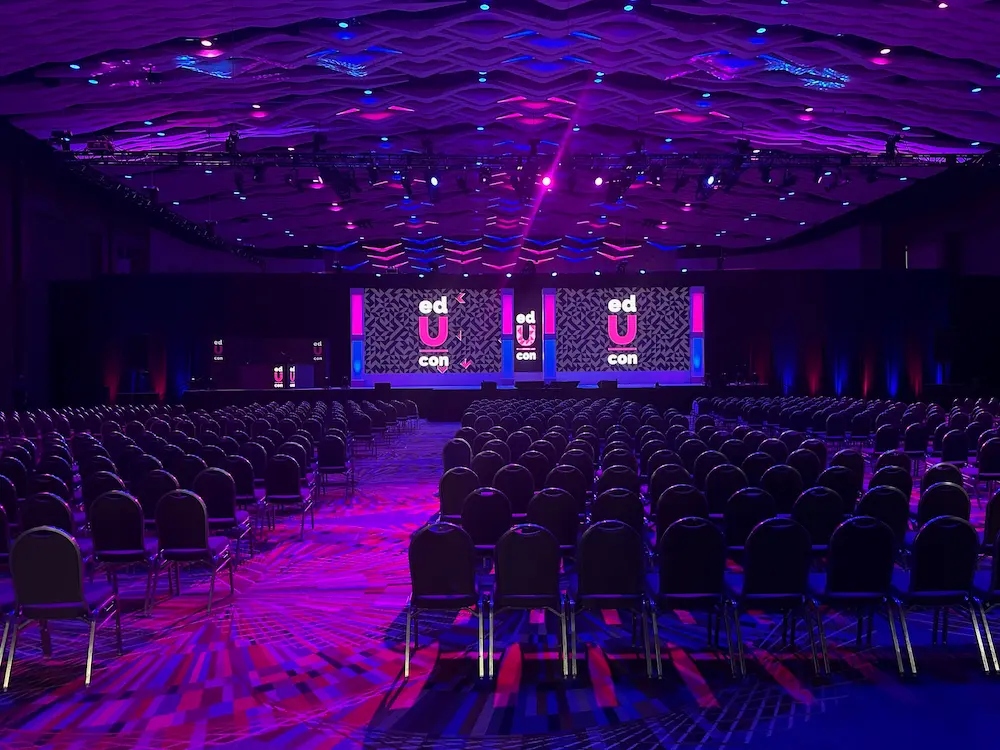
Planning an event at a major Detroit venue like Huntington Place means working with union stagehand labor. For many event planners, especially those new to the Detroit market, navigating IATSE labor rules can feel overwhelming. Terms like minimum calls, callback requirements, and steward mandates may be unfamiliar territory.
Understanding these rules isn’t just about compliance. It’s about building realistic budgets, creating accurate timelines, and avoiding costly surprises on event day. At Premier Creative Group, we’ve worked with IATSE Local 38 stagehands for over 20 years, and we’ve seen how proper planning makes the difference between smooth productions and stressful ones.
This guide breaks down the key labor rules you need to understand when planning events in Detroit.
What is IATSE and Why Does It Matter?
IATSE stands for the International Alliance of Theatrical Stage Employees. According to Wikipedia, this labor union represents over 168,000 technicians, artisans, and craftspersons in the entertainment industry, including live theatre, motion picture production, broadcast, and trade shows throughout the United States and Canada. The IATSE official website provides additional information about the union’s mission and local chapters.
In Detroit, IATSE Local 38 represents the stagehands who work at major venues including Huntington Place (formerly TCF Center and Cobo Center). These skilled technicians handle everything from lighting and audio installation to rigging, video systems, and stage construction.
When you book an event at a union venue, you’re required to use union labor for specific tasks. This isn’t optional. The work covered by IATSE jurisdiction includes installation, operation, and dismantling of theatrical lighting, audio, video equipment, rigging, scenery, and related technical elements.
Key Takeaways:
- IATSE Local 38 covers Detroit venues including Huntington Place
- Union labor is required for AV installation, operation, and dismantling
- Understanding the rules helps you build accurate budgets and timelines
The Five-Day Advance Notice Rule
One of the most important rules for Detroit event planners is the labor ordering timeline. At Huntington Place, labor must be ordered a minimum of five business days before your requested start date and time. Business days mean Monday through Friday, excluding holidays, between 9 AM and 5 PM.
This isn’t a suggestion. If you fail to order labor with adequate notice, you risk not having the crew you need when load-in begins. For large events with complex AV requirements, this could mean significant delays or the inability to execute your production as planned.
The five-day rule also applies to labor reductions. If you need to reduce your crew size, that change must be submitted in writing at least 24 hours before the call starts. For weekend calls, reductions must be submitted by 3 PM on Thursday. Labor cancelled without proper notice incurs a four-hour cancellation fee per worker.
Key Takeaways:
- Order labor at least five business days in advance
- Submit crew reductions in writing 24 hours before the call
- Late cancellations trigger a four-hour fee per worker
Minimum Call Requirements
Every stagehand called to work on your event is guaranteed a minimum payment, regardless of how long the actual work takes. At Huntington Place and most Detroit union venues, the minimum call is four hours per worker per day.
This means if you need a crew for a two-hour task, you’re still paying for four hours. Understanding this helps you plan efficiently. Rather than bringing in separate crews for short tasks throughout the day, it often makes more sense to consolidate work into longer calls that maximize the value of your labor spend.
The minimum call applies separately to installation, run of show, and dismantling. If your event includes all three phases, each phase carries its own four-hour minimum.
Key Takeaways:
- Minimum call is four hours per worker per day
- Short tasks still require paying the four-hour minimum
- Each phase (install, run, strike) has its own minimum
Callback and Meal Break Rules
After a meal break, the minimum callback is two hours. If you send the crew to lunch and need them back afterward, you’re committing to at least two more hours of paid labor.
Meal breaks follow specific timing requirements. Stagehands must receive an unpaid 30-minute meal break no less than three hours and no more than five hours after their start time. If you don’t provide the meal break within this window, you pay overtime rates until the break is given.
According to the U.S. Department of Labor, workers covered by federal labor law are entitled to overtime pay at 1.5 times their regular rate for hours exceeding 40 in a workweek. Union contracts often include additional overtime provisions for daily hours, weekend work, and holiday work that may exceed federal minimums.
After the first meal break, subsequent meal periods are on the clock and must be scheduled every three to five hours. Planning your day around these meal requirements helps you avoid unnecessary overtime charges.
Key Takeaways:
- Minimum callback after meal break is two hours
- First meal break must occur between three and five hours after start
- Missing meal break windows triggers overtime pay
Steward Requirements for Large Crews
When your labor call exceeds 15 workers, you must have a non-working steward assigned. This person is the union’s representative on the job site and does not perform production work.
The steward handles crew assignments, tracks hours worked, ensures workers are properly compensated, and serves as liaison between the crew and the employer. On large events that span multiple days, the steward remains assigned for the entire set, run, and strike of the show.
For events with multiple AV contractors working simultaneously, the steward’s hours are prorated across all contractors that ordered labor for that event. This is important for budgeting purposes when you’re sharing venue space with other productions.
Key Takeaways:
- Crews exceeding 15 workers require a non-working steward
- Steward costs are prorated across multiple contractors on shared events
- The steward remains assigned for the duration of your event
Overtime and Premium Pay Rates
Understanding overtime calculations is essential for accurate budgeting. A standard work day at most Detroit union venues consists of eight hours of straight time between 6 AM and 10 PM, Monday through Friday.
Time and a half applies to all hours worked beyond eight in a single day, all hours between 10 PM and 6 AM on weekdays, and all hours worked on Saturdays. Premium pay (typically 1.9 times the regular rate) applies to Sundays and recognized holidays.
Union holidays typically include New Year’s Eve and Day, Presidents Day, Memorial Day, Independence Day, Labor Day, Thanksgiving and the day after, Christmas Eve and Day. Planning your event around these dates helps manage labor costs.
Hours are computed in whole hourly periods, meaning if your crew works four and a half hours, you pay for five hours. This rounding rule affects every calculation in your labor budget.
Key Takeaways:
- Standard day is eight hours straight time, 6 AM to 10 PM, Monday-Friday
- Overtime (1.5x) applies after eight hours, overnight, and Saturdays
- Premium pay (1.9x) applies to Sundays and holidays
- Hours round up to the next full hour
Scope of Work and Jurisdiction
Understanding what work falls under stagehand jurisdiction helps you plan appropriately. IATSE stagehands are required for installation and dismantling of all audio, video, lighting, and related equipment under supervision of your AV contractor.
During the run of show, you must maintain a minimum crew to handle changeovers, troubleshoot equipment, and respond to last-minute needs. The specific crew composition depends on your production requirements, but typically includes positions like A2 (audio assistant), L2 (lighting assistant), and projectionist as applicable.
Your AV contractor may use their own full-time employees in key positions such as sound board and lighting board operators during the run of show. However, supporting positions must be filled with union labor.
Work not covered by stagehand jurisdiction includes general draping, aisle carpeting, stage skirting, table skirting, and hanging signs. These fall under other labor providers. Understanding this division helps you engage the right contractors for each task.
Key Takeaways:
- Stagehands required for all AV installation, operation, and strike
- Key board operator positions may use contractor employees
- Supporting crew positions require union labor
- Draping and general décor fall under different jurisdiction
How Premier Handles IATSE Labor
When you work with Premier Creative Group, we manage the entire labor process on your behalf. We understand the rules because we’ve been working with Local 38 for over two decades at Huntington Place and throughout Detroit.
We order labor within the required timelines, ensuring you have the crew you need when load-in begins. We plan your schedule around meal break requirements and callback minimums, so you’re not paying for avoidable overtime. We coordinate with stewards and manage crew assignments to keep your production running smoothly.
Most importantly, we build accurate labor budgets from the start. We know how to structure calls efficiently, consolidate tasks to maximize your labor spend, and anticipate the overtime scenarios that catch inexperienced planners off guard.
If you’re planning an event in Detroit and want a partner who understands both the technical production and the labor requirements, contact us to start the conversation. Learn more about our crewing services and how we support events at Huntington Place and throughout the region.
Visit premierav.net to explore our full range of production capabilities, or connect with us on LinkedIn to see examples of our recent work.
Frequently Asked Questions About IATSE Labor in Detroit
What is the minimum call for stagehands in Detroit?
The standard minimum call at Detroit union venues including Huntington Place is four hours per worker per day. This means even if your actual task takes less than four hours, you pay for the full minimum. The minimum applies separately to installation, run of show, and strike phases of your event.
How far in advance do I need to order union labor?
Labor must be ordered at least five business days before your requested start time. Business days are Monday through Friday, excluding holidays, between 9 AM and 5 PM. Failure to order labor with adequate notice may result in insufficient crew for your event.
What happens if I need to reduce my crew size?
Crew reductions must be submitted in writing at least 24 hours before the call starts. For Saturday, Sunday, or Monday calls, reductions must be received by 3 PM on Thursday. Labor cancelled without proper notice incurs a four-hour cancellation fee per worker at the prevailing rate.
When is a steward required for my event?
A non-working steward is required whenever your labor call exceeds 15 workers. The steward is assigned for the entire set, run, and strike of your show. For events with multiple AV contractors, steward hours are prorated across all contractors ordering labor.
What are the overtime rates for Detroit stagehands?
Time and a half applies to hours worked beyond eight in a single weekday, hours between 10 PM and 6 AM, and all Saturday hours. Premium pay (typically 1.9 times the regular rate) applies to Sundays and recognized union holidays. Hours are rounded up to the next full hour.
What work requires union stagehands?
Stagehand jurisdiction covers installation, operation, and dismantling of theatrical lighting, audio, video equipment, rigging, scenery, and related technical elements. Supporting positions during run of show must be union labor, though key board operator positions may use your AV contractor’s full-time employees.
How do meal breaks affect my labor costs?
Stagehands must receive a 30-minute meal break between three and five hours after their start time. If you don’t provide the break within this window, overtime rates apply until the break is given. After a meal break, the minimum callback is two hours. Subsequent meal breaks are on the clock.
About Premier Creative Group
Premier Creative Group is a Detroit-based live event production company specializing in audiovisual services for conventions, corporate events, and trade shows. With over 20 years of experience at venues like Huntington Place, we understand both the technical requirements and labor rules that make Detroit events successful. Our team manages the entire production process, including union labor coordination, so you can focus on your event. Connect with us on LinkedIn.